Bedtime Stalling Tactics: Why Kids Do It (and How to Stop Them Calmly)
Why does my child stall so much at bedtime?
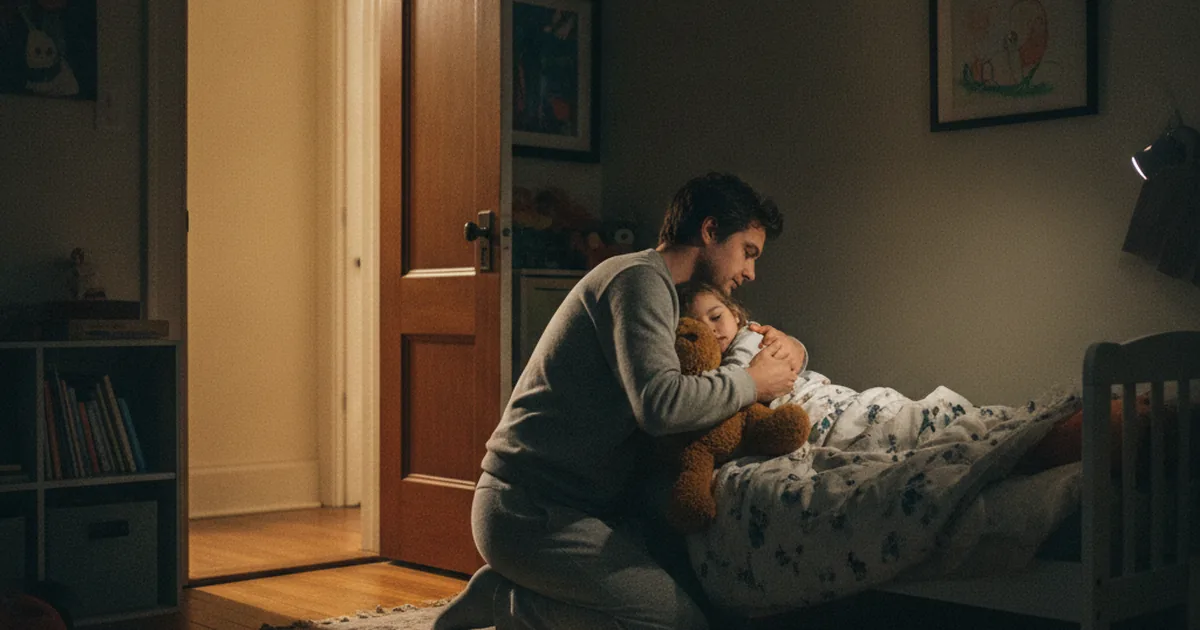
Bedtime asks a young child to do something genuinely hard: stop playing, separate from you, and lie still in the dark until sleep arrives on its own schedule. For a toddler or preschooler who has just discovered how much power a well-timed request can carry, that combination is almost irresistible to negotiate. Bedtime stalling is driven mostly by separation anxiety, which peaks in the toddler and preschool years, plus a simple behavioral reality: any request that gets a response — even an annoyed one — from you keeps your attention in the room a little longer, which is exactly what an anxious or wound-up child is after.
What do bedtime stalling tactics actually look like?
Once you start noticing the pattern, it’s hard to unsee. Common “curtain calls” include:
- “One more story” (or song, or hug). The classic. Often escalates to a second and third “just one more” if the first one works.
- Sudden physical needs. Thirst, hunger, or a bathroom trip that somehow wasn’t urgent five minutes ago.
- Forgotten essentials. A missing stuffed animal, the wrong blanket, a door left at the wrong angle.
- Urgent conversations. A question about tomorrow, a confession, a sudden need to discuss dinosaurs — anything that requires you to stay and answer.
- Repeated check-ins. Calling out, appearing in the hallway, or padding into the living room “just to see” what you’re doing.
None of these are manipulation in the adult sense — they’re a young brain testing, quite reasonably, whether bedtime is really final tonight.
How do I stop the “one more story” negotiation before it starts?
The most effective fix happens before lights-out, not during it. Build the requests you already know are coming directly into the routine, so there’s nothing left to stall with: offer the water cup, do the last bathroom trip, do the extra hug, and confirm the stuffed animal is in bed before you say goodnight, not after. Naming the plan out loud helps too — “we’re reading two stories tonight, then lights off” — so the boundary is set collaboratively rather than announced as a surprise at the worst possible moment. This works especially well as the finishing step of a predictable 20-minute wind-down routine, which lowers the overall wound-up energy that fuels stalling in the first place.
What do I actually say when the stalling starts anyway?
Pick one short, warm, boring sentence and repeat it verbatim every time: something like “I love you, it’s sleep time now,” said gently, then leave. The repetition is doing the work, not the words — a varied response (reasoning one time, negotiating the next, getting frustrated after that) accidentally teaches a child that persistence eventually gets a different, more interesting reaction, which reinforces the whole cycle. A flat, affectionate, unchanging response gives a stalling request nothing new to latch onto, and most children lose interest in a script that never changes within a handful of nights.
Does the “bedtime pass” trick actually work?
It’s one of the better-studied tools for this exact problem. In a small randomized controlled trial, children given a single physical “bedtime pass” — a card they could redeem once per night for one extra request or a brief parent visit, with no more redemptions after it was used — called out and left their rooms significantly less than children in a monitoring-only group, and the improvement held up at a three-month follow-up (Moore et al., 2007). The pass works by giving a child a concrete, limited, and honored way to ask for one more thing, which satisfies the urge to negotiate without leaving the door open to unlimited curtain calls. Decorate an index card together, explain the one-use rule during the day (not at bedtime), and hold the line once it’s spent for the night.
Is frequent bedtime stalling ever a sign of something more?
Occasional stalling is close to universal in the toddler and preschool years and isn’t something to worry about on its own. It’s worth a closer look if stalling is paired with real distress rather than negotiation — genuine tears, racing thoughts, or fear of the dark or of being alone that doesn’t ease with reassurance. In that case the underlying driver is more likely anxiety than habit, and it helps to address that directly; our guide to helping an anxious child fall asleep covers gentler, worry-specific strategies that work alongside (not instead of) the boundary-setting above.
This post reflects general behavioral sleep guidance and isn’t medical advice; if bedtime resistance is severe, involves ongoing distress, or doesn’t ease with a consistent approach over a few weeks, talk with your pediatrician.
Frequently asked questions
What age do bedtime stalling tactics peak?
Stalling and curtain calls are most common between about ages 2 and 6, peaking as toddlers and preschoolers develop stronger language, more separation anxiety, and a clearer sense that requests can extend how long a parent stays in the room. It typically eases as children move into early elementary school and become more comfortable settling alone.
Should I just give in to “one more story” to avoid a fight?
Occasionally, sure — but as a rule, giving in tends to teach a child that stalling eventually works if repeated enough, which usually increases stalling over time rather than reducing it. It works better to build the extra story or hug into the routine as a planned, named step before lights-out, so there’s nothing left to win by asking again afterward.
What is the bedtime pass and does it really work?
A bedtime pass is a physical card a child can redeem once per night for one extra request or brief visit, with no further redemptions once it's used. A randomized controlled trial found children using a bedtime pass left their rooms and called out significantly less often than a monitoring-only control group, with the effect still holding three months later.
My child says they're scared, not just stalling — how do I tell the difference?
Genuine fear usually looks like real distress — tears, a racing heart, trouble calming even with reassurance — rather than a calm, matter-of-fact request. Stalling tends to stop quickly once you respond with the same calm line and leave; fear tends to persist and often needs a gentler, more patient approach rather than a firm boundary alone.
How long does it take to stop a stalling habit once it's started?
Most families see stalling ease within one to two weeks of consistently anticipating requests before lights-out and responding to repeat requests with the same unchanging, calm line. The first few nights are often the hardest, since a child will typically test the new pattern before accepting that it isn't going to change.
Is bedtime stalling different from a full bedtime meltdown?
Yes — stalling is a negotiation (a request, a delay, a bid for more time), while a meltdown is a loss of emotional control, often tied to overtiredness rather than negotiation. If bedtime regularly turns into tears and big feelings rather than polite requests, it's worth looking at whether your child is overtired going into the routine, since an overtired nervous system stalls very differently than a simply reluctant one.
Sources
Sleep Foundation — Sleep Strategies for Children.
American Academy of Pediatrics (HealthyChildren.org) — Separation Anxiety & Sleeping Trouble in Young Children.
Journal of Pediatric Psychology (PubMed) — Evaluating the Bedtime Pass Program for Child Resistance to Bedtime.
Sleep Foundation — Perfecting Your Child’s Bedtime Routine.