Car Naps Messing Up Bedtime? Why It Happens and How to Fix It
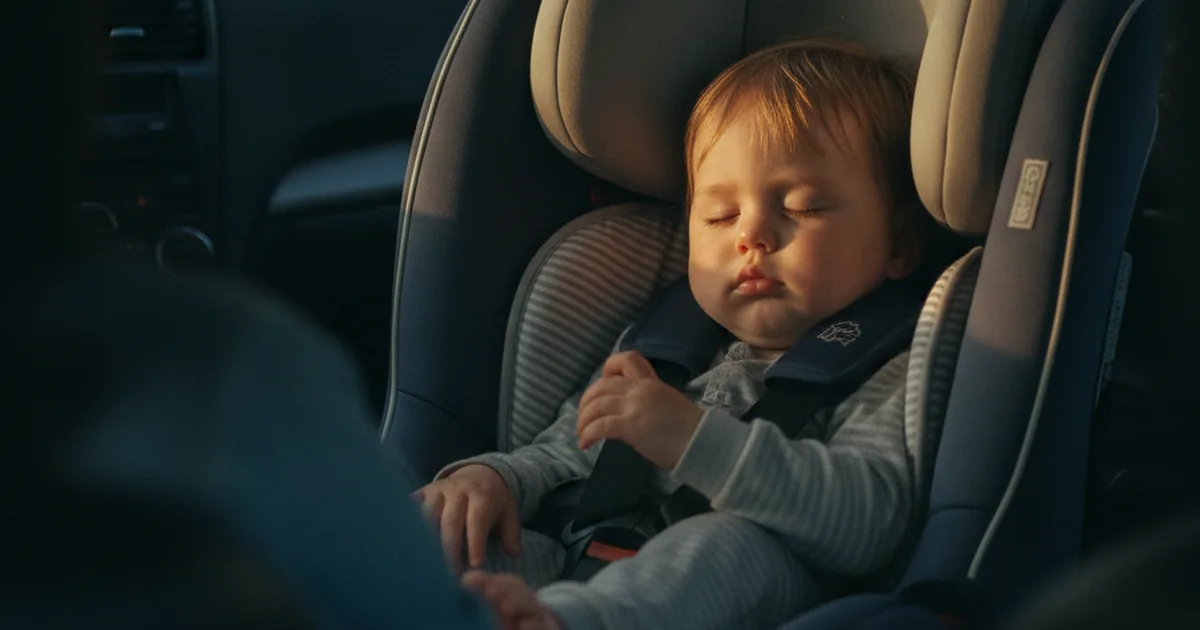
Why does a car nap throw bedtime off at all?
A car nap and a crib nap aren't quite the same kind of sleep. Motion tends to bring a child down into sleep quickly, but that sleep is often lighter and more easily interrupted than a nap in a still, dark, familiar room — which is part of why a twenty-minute car nap can leave a toddler groggier than a twenty-minute crib nap would. On top of that, a car nap usually happens whenever the errand, the pickup line, or the drive across town allows, not when your child's body is actually cueing for sleep. That mismatch in both quality and timing is what tends to ripple into the evening.
Nap timing matters more than most parents expect, car nap or otherwise: a nap that wraps up too late in the day doesn't leave enough hours for sleep pressure to build back up before bedtime — the biological signal that makes falling asleep feel easy instead of like a fight. A car nap that starts at 4:00 and runs to 4:45 can leave a child not truly ready for bed until well past their usual time, no matter how faithfully you run the bath-book-bed routine.
What does the disruption actually look like at home?
It rarely announces itself as "the car nap did this." It shows up as ordinary bedtime trouble that's confusing because the evening itself didn't change:
A late nap, late bedtime spiral. A car nap taken on the way home from daycare or a late-afternoon appointment can push a child's body clock back by an hour or more, so the usual 7:00 bedtime meets a child who genuinely isn't sleepy yet.
A short, low-quality nap, overtired evening. Because car sleep is lighter, a child can wake from a fifteen-minute car nap groggy and cranky rather than refreshed — not enough rest to coast through to bedtime, but enough to blunt the sleep pressure that would otherwise carry them there smoothly. Past a certain point of tiredness, overtiredness triggers a stress-hormone response that works against sleep rather than for it, which is why an exhausted child can seem wired instead of drowsy at lights-out.
Day-to-day inconsistency. A child who naps in the car on errand-heavy days and in the crib on quieter days is, in effect, living on two different nap patterns. A body clock that likes repetition has a harder time settling into either one.
How do I tell if the car nap is actually the problem?
Keep a loose log for a week: what time the car nap started and ended, roughly how it seemed afterward (groggy, cheerful, resistant), and how bedtime went that same evening. A pattern usually shows up fast — late or long car naps tracking with late, fought bedtimes, or short, poor-quality car naps tracking with early meltdowns. If bedtime is smooth on days without a car nap and rough on days with one, the timing (not the car nap itself) is very likely the culprit.
How do I keep the car nap without wrecking bedtime?
Most families don't need to eliminate car naps — they need to manage the timing:
Aim for the same window most days. A car nap that reliably happens around the same time each day, even if it's not your child's ideal at-home nap time, is far easier on the body clock than one that swings by an hour or two depending on the day's errands.
Set a soft cutoff. If the nap is going to run past mid-to-late afternoon, it's usually worth gently waking your child rather than letting it run its full length. A groggy ten minutes after an early wake is a smaller cost than a bedtime pushed an hour or more later.
Wake at a stop, not mid-drive. If you can time the wake-up to when the car actually stops — pulling into the driveway, arriving at pickup — the transition out of sleep tends to go more smoothly than waking a child mid-motion.
Match bedtime to the nap, not the clock. On a day the car nap ran later than usual, plan on roughly four to five hours of awake time afterward rather than forcing the usual bedtime. A slightly later, well-matched bedtime beats an earlier one your child isn't actually ready for.
Build in extra wind-down after a poor-quality nap. A short, light car nap can leave a child more keyed up than well-rested. A few unhurried extra minutes in the wind-down routine — dim lights, a bath, a calm story — helps an overstimulated nervous system downshift regardless of how the nap went.
A steady, low-stimulation wind-down matters even more on days when nap timing was out of your hands. Sleepy Spell's private, on-device audio stories give a child the same calm voice and pacing every night — screen-dark, so there's no extra light working against an already-tired body clock, just one predictable part of the evening your child can count on no matter how the day's naps landed.
What if my child will only nap in the car or stroller?
It's a common phase, and it's almost always a motion-and-association habit rather than a red flag. If you'd rather shift toward crib naps, try bringing pieces of the car nap environment home first — white noise, a dim and still room — and move the timing gradually rather than cutting the car nap cold. Plenty of families find it simpler to just work with the car nap as one flexible tool in the schedule, as long as the timing stays reasonably consistent day to day.
How long before bedtime settles down?
Once you've pinned down whether it's timing, length, or day-to-day inconsistency that's driving the trouble, and made one specific change — a soft cutoff, a more consistent window, or a later matched bedtime — most families see bedtime ease within a week or two. Sleep pressure and the body's internal clock respond fairly quickly to a steady pattern; the harder part is usually spotting which piece is out of sync, not fixing it once you know.
This post reflects general guidance on children's sleep and daily routines and isn't medical advice. If sleep trouble is severe, persistent, or paired with other concerns, check in with your pediatrician.
Frequently asked questions
Why does a car nap or stroller nap mess up bedtime?
A car or stroller nap is usually shorter and lighter than a crib nap, since motion-induced sleep tends to be shallower and easier to interrupt. It can also happen later or earlier than a child's usual nap window, simply because it lines up with an errand or a school pickup rather than their body clock. Either a mistimed nap or a too-short one changes how much sleep pressure has rebuilt by evening, which shows up at home as bedtime stalling or an unexpected late second wind, even though nothing about the evening routine changed.
How long is too long for a car nap?
There's no universal cutoff, but as a rough guide, a car nap that runs past mid-to-late afternoon or crosses the 45-60 minute mark for a toddler starts eating into the four to five hours of awake time most kids need to rebuild sleep pressure before bedtime. A short catnap earlier in the day is far less disruptive than a long one that ends close to dinnertime.
Should I wake my child up from a car nap?
If the nap is running late enough that it will crowd bedtime, yes, it's usually better to gently wake your child rather than let it run its full length. Waking mid-nap can bring on a groggy, cranky ten or fifteen minutes, but that's a smaller cost than a bedtime pushed an hour or more past its usual time. If you can, wake your child as the car stops rather than mid-drive, so the transition is gentler.
Is it OK to let my toddler nap in the car every day?
It's fine as an occasional or even routine solution, especially for families whose schedule genuinely runs through the car most days. What matters more than where the nap happens is whether it's timed consistently and doesn't run so long or so late that it steals from the evening's sleep pressure. A car nap that happens at roughly the same time and length each day is far easier on bedtime than one that varies wildly from day to day.
What if my child only naps in the car or stroller and won't nap in the crib?
This is common and usually a motion-and-association habit rather than a sign anything is wrong. If you'd rather move toward crib naps, try replicating small pieces of the car nap environment at home first, such as white noise or a dim, still room, and shift the timing gradually rather than dropping the car nap all at once. Many families find it simpler to accept the car nap as one flexible tool in the schedule rather than fighting it, as long as timing stays reasonably consistent.
Does a late car nap affect bedtime the same way a late crib nap does?
Yes, the mechanism is the same either way: the later a nap ends, the less time is left for sleep pressure to build back up before bedtime, regardless of whether the nap happened in a crib, a stroller, or a car seat. A late car nap after a school pickup or a long errand run is just as likely to push bedtime later as a late crib nap would be.
Sources
American Academy of Pediatrics (HealthyChildren.org) — Healthy Sleep Habits: How Many Hours Does Your Child Need?.
Sleep Foundation — Napping for Children: Guidelines by Age.
Sleep Foundation — Toddler Sleep: What to Expect.
ZERO TO THREE — Sleep.