Kids' Sleep in a Heatwave: How to Cool a Hot Bedroom
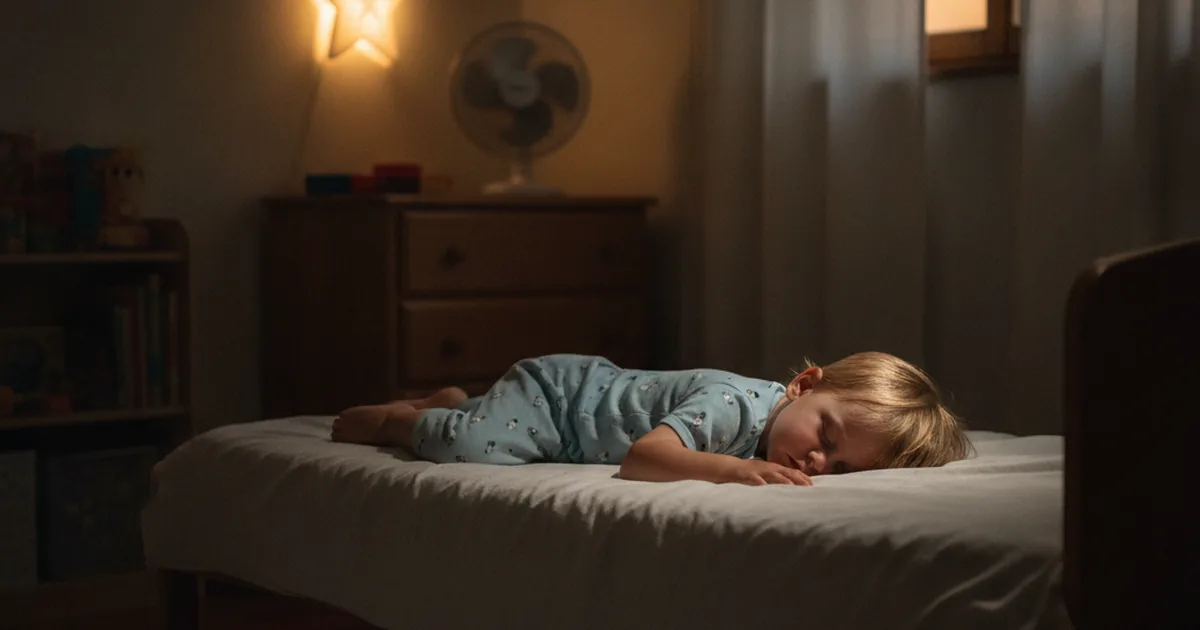
Every heatwave brings the same 2 am text in parent group chats: “Is anyone else's kid up because it's just too hot?” It's not your imagination and it's not just a fussy night — heat genuinely fights sleep at a biological level, and kids are more sensitive to it than adults. The good news is that you don't need central air conditioning to make real progress. A few targeted changes to airflow, timing, and bedding can bring a stuffy room down to something workable.
Why does heat make it so much harder for kids to sleep?
Falling asleep requires your child's core body temperature to drop slightly, and a hot room works directly against that. When the surrounding air is warm, the body has to work harder to shed heat, which delays sleep onset and makes the lighter stages of sleep more fragile — so kids wake more easily and more often. Children also regulate their body temperature less efficiently than adults, particularly infants and toddlers, which is part of why a room that feels merely warm to you can feel genuinely uncomfortable to them.
What's the best bedroom temperature for a child during a heatwave?
Most sleep guidance points to roughly 65-70°F (18-21°C) as the sweet spot for children's sleep, with anything into the low 70s°F still reasonable. During a real heatwave without air conditioning, hitting that exact number may not be possible, and that's okay — the goal is to get as close as you reasonably can. Even a few degrees of improvement, combined with better airflow and lighter bedding, makes a meaningful difference in how easily your child settles and stays asleep.
How do I cool a room down without air conditioning?
Fight the heat before it arrives, not after. Close blinds or blackout curtains on sun-facing windows during the day so the room doesn't bake in the first place, then open windows in the evening once outside air is actually cooler than inside — often later than it feels like it should be. A box fan or portable fan placed near an open window can pull that cooler evening air in, and running a fan across a shallow bowl of ice for a short while gives a brief, extra cooling boost. If one room in the house stays noticeably cooler (often a lower floor or a room away from direct sun), a temporary floor mattress there for the worst nights of a heatwave is a perfectly reasonable stopgap.
Is it safe to use a fan in a baby's or toddler's room overnight?
Yes, and it's one of the most effective low-cost tools you have. Position the fan a few feet away from the crib or bed rather than pointed directly at your child at close range, and make sure any cords are well out of reach. A fan circulating air across the room, rather than blasting one spot, both cools the space and adds a steady, gentle hum — many families notice it doubles as a helpful sleep sound. If you already use white noise for sleep, a fan can conveniently serve both purposes on a hot night.
What should my child wear and sleep on in the heat?
Less is genuinely more here. A single lightweight, breathable layer — thin cotton pajamas, or for a baby, just a diaper and a light onesie — is usually plenty, and it's fine to skip a sleep sack or blanket entirely on the hottest nights as long as the sleep space is otherwise safe for your child's age. Swap a heavy comforter for a light cotton sheet, and if you're due for new bedding, breathable cotton or bamboo fabrics sleep noticeably cooler than synthetic blends, which tend to trap heat and moisture against the skin.
What are the signs my child is too hot at night?
Watch for a flushed face, damp hair, a sweaty neck or back, restless tossing, and more frequent waking than usual. Feel the back of your child's neck or chest rather than their hands or feet, which are naturally cooler and don't reflect overall body temperature well. Overheating is also a recognized risk factor worth taking seriously for infants in particular, so if you're ever unsure, it's better to err toward a cooler room and lighter layers rather than an extra one.
Should I adjust bedtime or the routine itself during a heatwave?
A short delay of 15-20 minutes to let the room finish cooling in the evening is reasonable, but try not to let the whole routine slide much later than usual, since your child's total sleep need doesn't change with the temperature outside. It also helps to move any bath earlier and slightly cooler than usual, since a very warm bath right before bed raises body temperature at exactly the wrong moment. Keep the rest of the sequence — same order, same calming sounds — as consistent as you can; a familiar routine still does real work even when the room feels different than usual, similar to how it helps on unfamiliar nights while traveling.
Give a new cooling setup a few nights to prove itself, since a body that's been sleeping warm for a while needs a little time to adjust even once the room itself improves. This is general parenting guidance, not medical advice; contact your pediatrician promptly if you're concerned about dehydration, heat-related illness, or a child who seems unusually unwell during a heatwave.
Frequently asked questions
What's the best bedroom temperature for a child to sleep in during a heatwave?
Sleep researchers generally point to somewhere around 65-70°F (18-21°C) as the ideal range for children's sleep, though anything up to the low 70s°F is still workable. During a heatwave without air conditioning you may not be able to hit that number, but every degree you can shave off the room helps, and the other strategies here (airflow, lighter bedding, timing) can make a warmer room feel more sleepable even when the thermostat won't cooperate.
Is it safe to run a fan in a baby's or toddler's room overnight?
Yes, a fan is one of the safest and most effective tools for a hot night, as long as it's positioned out of reach and not pointed directly at a baby at close range for hours. Keep the fan a few feet from the crib or bed, secure any cords well out of reach, and aim it to circulate air across the room rather than blast directly on your child's face all night.
How can I cool down my child's room without air conditioning?
Close blinds or curtains during the hottest part of the day to keep heat from building up in the first place, then open windows in the evening once outside air is cooler than inside air. A fan near an open window can pull in that cooler air, and a bowl of ice in front of a fan gives a small, brief boost. Moving a mattress or floor bed to the coolest room in the house for a few nights is a reasonable temporary fix during a genuine heatwave.
Should I dress my child in less clothing or use different bedding in hot weather?
Yes. A single lightweight, breathable layer (thin cotton pajamas or even just a diaper and onesie for a baby) is usually enough, and it's fine to skip a sleep sack or blanket entirely on the hottest nights, as long as the room is safe and age-appropriate otherwise. Swap heavy comforters for a light cotton sheet, and consider breathable cotton or bamboo sheets over synthetic ones, which tend to trap heat.
Does my child need extra water before bed during a heatwave?
Offer water more often through the day and a final cup around the bedtime routine, but avoid a large drink right at lights-out if it tends to cause a middle-of-the-night wake-up for a bathroom trip. Watch for signs of dehydration such as a dry mouth, fewer wet diapers or bathroom trips than usual, or unusual fussiness, and check with your pediatrician if you're ever concerned, especially for babies and toddlers during extreme heat.
What are the signs my child is too hot at night?
A flushed face, damp hair or a sweaty neck and back, restless tossing, and waking more than usual are the most common signs. Feel the back of your child's neck or chest rather than their hands or feet, which are naturally cooler; a hot, sweaty torso is the better indicator that the room or bedding needs adjusting. Overheating is also a known risk factor worth taking seriously for infants, so err on the side of a cooler room and lighter layers when in doubt.
Sources
Sleep Foundation — Best Temperature for Sleep.
Centers for Disease Control and Prevention — Preventing Heat-Related Illness.
American Academy of Pediatrics (HealthyChildren.org) — Beat the Heat: Preventing Heat Illness in Children.
Sleep Foundation — How to Sleep When It's Hot.