Sleep Regressions by Age: What's Actually Happening at Each Stage
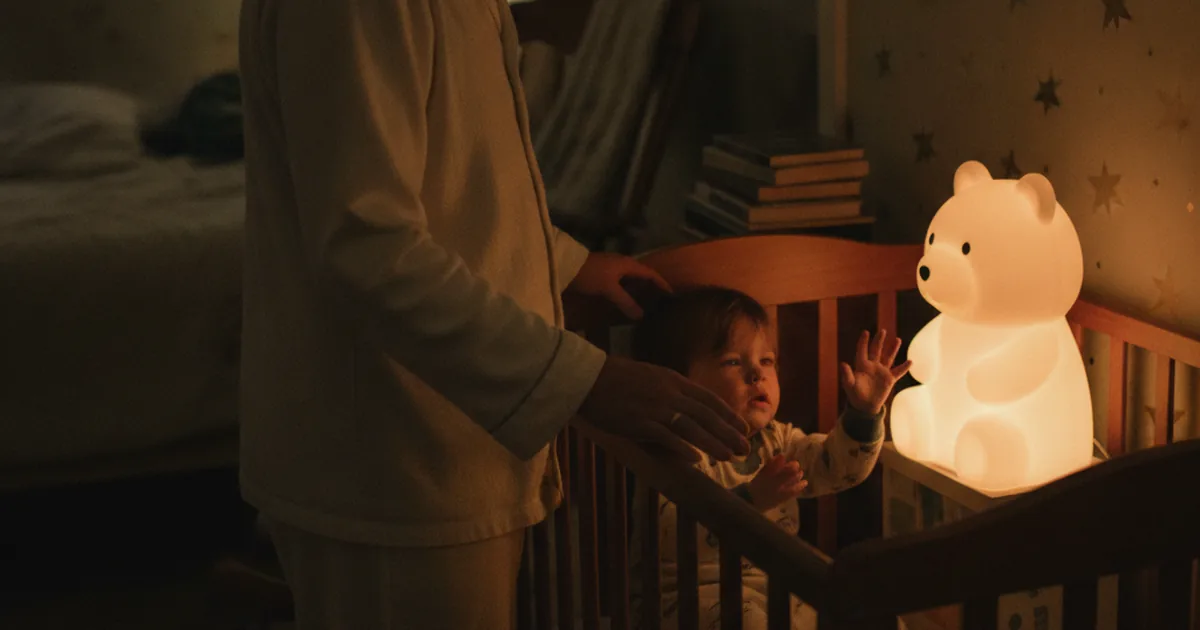
What is a sleep regression, exactly?
A sleep regression is a stretch of days or weeks where a baby or toddler who had settled into a fairly predictable sleep pattern suddenly starts waking more often, resisting naps or bedtime, or waking for good far earlier than usual — with no illness or environment change to explain it. The near-universal cause is a leap forward somewhere else: a new physical skill (rolling, crawling, standing, walking), a burst in language or cognitive ability, or a developmental increase in separation anxiety. A brain that's busy consolidating a new skill tends to cycle through lighter, more easily-interrupted sleep more often, and a body that's just learned to roll or stand sometimes practices the new move in the crib at 2 a.m. whether anyone wants it to or not.
It helps to know up front that regressions are a real, well-documented pattern, not a myth invented to explain away every rough patch — but not every bad night is one. Illness, teething, travel, a room that's too warm, or a missed nap can all look similar in the moment. A true regression tends to appear alongside (or right before) a clear new skill, lasts more than a couple of nights, and eases as the skill becomes old news.
The 4-month sleep regression: what's different about this one
The 4-month regression gets singled out because it isn't temporary the way the others are. Somewhere around 3–5 months, babies' sleep architecture matures from the simple, deep newborn pattern into an adult-style cycle made of distinct stages, including lighter sleep between cycles where a baby is more likely to fully wake (HealthyChildren.org, AAP). That's a permanent, healthy upgrade in how sleep works, not a glitch to wait out — the wake-ups don't disappear on their own the way an 18-month regression does, because the underlying sleep pattern has genuinely changed for good.
What helps here is different too: this is usually the point where families start building in an independent way for a baby to fall asleep (put down drowsy but awake) so that when a baby surfaces briefly between cycles, as everyone does, they can settle themselves back down rather than needing full intervention every single time. It's less about riding out a phase and more about adjusting the routine to match how sleep now actually works.
The 8–10 month regression: crawling, standing, and separation anxiety collide
This window usually lines up with a cluster of big leaps at once: crawling, pulling to stand, and a sharper, more painful awareness of being separated from a parent. Separation anxiety commonly peaks in this stage, so a baby who previously drifted off without protest may suddenly cry hard when put down, and wake fully (not just stir) checking that a parent is still nearby. Add a baby who's newly able to pull up to standing and you get a common, almost comic complication: a baby who stands up in the crib at 1 a.m. and hasn't yet figured out how to get back down, which turns a normal brief waking into a full cry for help.
Giving daytime practice time for the new skill — supervised floor time to crawl, pull up, and practice sitting back down — tends to reduce nighttime practice sessions, since a well-rehearsed skill is less compelling to test out alone in a dark room. Keeping the put-down routine and response pattern consistent, rather than reintroducing rocking or feeding to sleep out of exhaustion, usually shortens this one considerably.
The 18-month regression: language, independence, and a bigger “no”
Eighteen months brings a surge in language, a much stronger sense of independence, and often molars coming in around the same time, which can make it hard to tell where developmental regression ends and discomfort begins. This is frequently the first regression that looks less like “waking more” and more like outright bedtime resistance — a toddler who can now say “no,” climb out of things, and negotiate is going to use all three at 7 p.m. This stage overlaps closely with general toddler bedtime resistance, and the same calm, consistent approach that works there works here.
Holding the routine steady while giving a toddler small, safe choices within it — which pajamas, which of two books — tends to work better than either giving in to every delay tactic or turning bedtime into a battle of wills. A short, calm goodnight script repeated the same way every night gives a newly verbal toddler less to negotiate with, since there's nothing new being offered to push back against.
The 2-year regression: nightmares, big feelings, and dropping the nap
Around age 2, imagination takes a real leap forward, which is wonderful for pretend play and less wonderful at 3 a.m., when a vivid imagination starts producing genuine nightmares and a new, specific fear of the dark or of monsters. This age also frequently overlaps with nap transitions, molars, and a broader surge in big feelings and tantrums, so it's common for several regression-like threads to tangle together at once rather than showing up as one clean cause.
The most useful move here is to slow down and figure out which thread is actually driving the disruption — a shortened, mistimed nap, a new fear, or simple two-year-old boundary-testing all call for slightly different responses. If nightmares or a new fear of the dark are the main driver, treating it as its own thing (a nightlight, calm reassurance, not dismissing the fear) tends to help faster than treating it purely as a schedule problem.
How can I tell a regression apart from a new bad habit?
Timing is the clearest signal. A true regression tends to start abruptly, cluster around a recognizable leap (a new physical skill, a language burst, a nap transition), and improve within two to six weeks as that leap settles, even if you change nothing about your response. A habit, by contrast, tends to persist or even worsen the longer it continues, because it's being reinforced by whatever response it's getting rather than resolving on its own. If wake-ups are still frequent two months after the obvious trigger has clearly passed, it's worth looking at what's happening at each waking — a new nightly rocking session, feed, or bed-sharing arrangement that started during the regression can quietly become the new normal long after the original cause is gone.
This is also where keeping the wind-down itself calm and unchanging earns its keep. A predictable, screen-dark routine gives a child something steady to return to once a regression eases, instead of a routine that's drifted through several improvised versions along the way. Sleepy Spell's private, screen-dark audio stories are built for exactly that consistency — the same gentle, screen-free experience every night, so bedtime doesn't have to be reinvented every time development throws a curveball.
This post reflects general infant and toddler sleep guidance and isn't medical advice. If sleep disruption is severe, prolonged well beyond six weeks, or paired with other concerning symptoms, talk with your pediatrician.
Frequently asked questions
How long do sleep regressions usually last?
Most sleep regressions last two to six weeks, resolving on their own once the underlying developmental leap, growth spurt, or life change has settled and the original routine has had time to take hold again. Regressions that stretch on much longer are often being kept alive by a new habit (like a new sleep association) rather than the original trigger itself.
Is the 4-month sleep regression really different from the others?
Yes. The 4-month regression is a permanent shift in how a baby's sleep is structured, not a temporary disruption — babies mature from newborn sleep into adult-style sleep cycles with lighter stages between them, so wake-ups become more frequent and don't fully reverse. Later regressions (8-10 months, 18 months, 2 years) are temporary and tend to fully resolve within weeks.
Should I change my child's sleep routine during a regression?
Generally no — the routine is exactly what you want to keep steady while everything else feels unpredictable. It's fine to offer extra comfort or a brief adjustment during the hardest nights, but reverting fully to methods you'd already moved away from (like reintroducing feeding to sleep or full-time bed-sharing) tends to create a new habit that outlasts the regression itself.
Can teething or illness cause a sleep regression?
They can cause similar-looking disruption, but true developmental regressions are tied to a leap in skills like rolling, crawling, walking, or language rather than physical discomfort. Teething pain and illness are usually shorter, resolve as the tooth comes in or the illness passes, and often come with other clear symptoms like fussing, drooling, fever, or congestion.
Why does my toddler suddenly wake up crying for me during a regression?
Night waking during a regression is often tied to separation anxiety, which naturally intensifies around major developmental leaps as a child becomes more aware of being apart from a parent. Responding calmly and briefly, without turning the visit into a long conversation or a return to old habits, usually helps it pass faster than either ignoring it completely or over-engaging.
Do all babies and toddlers go through every regression?
No. Regressions are common but not universal — some children sail through certain ages with barely a ripple in their sleep, while others hit every one noticeably. Skipping a regression isn't a sign anything is wrong, and hitting one hard isn't a sign of a permanent sleep problem either; both are normal variation.
Sources
American Academy of Pediatrics (HealthyChildren.org) — Understanding Your Baby's Sleep.
American Academy of Pediatrics (HealthyChildren.org) — Separation Anxiety & Sleeping Trouble in Young Children.
Sleep Foundation — Sleep Regression: What It Is and How to Cope.
ZERO TO THREE — Ages & Stages: Developmental Milestones.