Do Blackout Curtains Actually Help Kids Sleep Better?
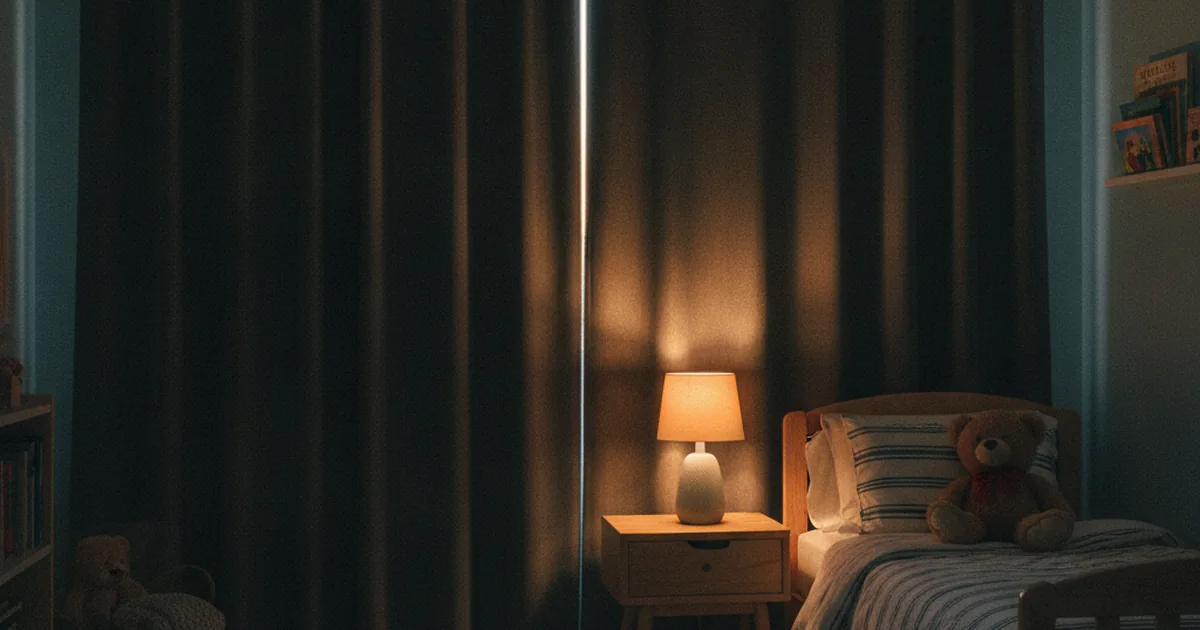
Why does light matter so much for a child's sleep?
A child's body clock, like an adult's, runs on light. Specialized cells in the eye detect brightness and send that signal to the brain's internal clock, which in turn tells the body when to release melatonin, the hormone that makes sleep feel like the natural next step rather than a fight. Bright light in the evening delays that release; bright light at dawn shuts it off early. Neither of those is a problem you can talk a toddler out of — it's a biological switch, not a behavior.
That's what makes light one of the few sleep variables that's almost entirely within a parent's control. You can't force a child to feel sleepy on command, but you can control how much daylight or streetlight reaches their eyes at 7 pm in June or 5:30 am in July, and that alone accounts for a surprising share of both bedtime resistance and early wake-ups.
What does the research actually say?
Pediatric sleep guidance consistently lists a dark sleep environment among the small number of factors that reliably improve both how fast children fall asleep and how well they stay asleep. It's not a fringe idea; it's one of the more evidence-backed, low-effort levers available, alongside a consistent wake time and a predictable wind-down. The effect tends to show up most clearly at the two ends of the night: falling asleep while it's still light outside in summer, and staying asleep once dawn arrives earlier than a family's intended wake time.
None of this means darkness has to be total. The practical target is dim enough that bright, direct light isn't reaching a sleeping child's eyes — not a sealed, lightproof bunker. A small amber nightlight for a child who feels anxious in full darkness doesn't meaningfully undercut the benefit; it's the difference between ambient dimness and streetlight-bright glare that matters.
Where does light exposure actually cause trouble at home?
Summer bedtimes. A 7 pm bedtime in June or July can mean putting a child to bed while the sky still looks like mid-afternoon, which sends exactly the wrong signal to a body clock that's watching for dusk. This is the single most common scenario where blackout curtains make a night-and-day difference — see our full guide on summer bedtime when it's still light out for the timing side of this problem.
Early summer mornings. Sunrise creeping earlier through late spring and summer is one of the most common causes of a child suddenly waking at 5 or 5:30 am after months of sleeping until 7. A room that stays genuinely dark past sunrise removes that trigger entirely.
Streetlights and porch lights. Even without direct sun, a streetlight, a neighbor's motion-sensor porch light, or headlights sweeping across a wall at night can be enough to disturb light sleep, particularly in the lighter early-morning sleep stages when a child is easiest to rouse.
Daylight saving transitions. Shifting the clock without shifting the light coming through the window is part of why daylight saving changes hit kids' sleep so hard; blackout curtains give you one more lever to actually enforce the new schedule instead of leaving it up to the sky.
How dark does a room actually need to be?
A simple test: stand in the room a few minutes after the lights go off, once your eyes have adjusted, and see whether you can make out your hand clearly in front of your face. If the answer is a clear yes, in most homes that means enough outside light is getting in to matter. You don't need a bunker — you need the room dark enough that daylight, streetlight, or headlights aren't the dominant light source once the door is closed.
Curtains and nightlight color work together, not against each other. If you're also choosing a nightlight for a child who doesn't love full darkness, our guide to the best nightlight color for kids' sleep covers which tones are gentlest on a winding-down body clock.
Curtains, blinds, or both?
Blackout curtains use a light-blocking lining or fabric and hang over the window; they block most light but can leak some around the edges and top. Blackout blinds or cellular shades mount closer to the window frame and, sized well, seal the gaps more completely, but they can still let light through where the blind meets the frame. The most effective (and most common) setup layers both: a snug-fitting blackout shade against the glass, with curtains hung over the top to catch whatever light slips around the edges.
If a full blackout curtain isn't in the budget right now, clip-on blackout liners for existing curtains, suction-cup travel blackout blinds, or even a well-taped piece of black poster board work almost as well optically — what matters for sleep is how much light actually reaches the room, not how polished the setup looks.
Does darkness cause its own problems, like early bedtimes or hard mornings?
The trade-off worth planning for is the morning side: a very dark room won't wake anyone up on its own, so if you rely on daylight to naturally rouse your child at a reasonable hour, blackout curtains can push that later than you'd like. A cracked door for a sliver of hallway light, a simple wake-to-rise lamp, or an alarm keeps the wake time anchored even when the room itself stays dark. For daytime naps, this isn't really a downside at all — a room that's dark on demand, at 1 pm or 7 pm, gives a consistent cue regardless of the season or the hour, which is exactly what a napping toddler's body clock benefits from.
A dark, calm room is only half the wind-down equation — what fills those last few minutes before sleep matters just as much. Sleepy Spell's private, screen-dark audio stories are screen-dark by design, so there's no extra light working against a room you've just spent effort darkening, just a calm, familiar voice to close out the day.
What about travel, or rooms that just can't be fully darkened?
Hotel rooms, shared rooms, or windows with an odd shape are common reasons a fully blacked-out room isn't realistic. A portable blackout blind or a taped-up towel over the gap can get most of the way there even in a rental. For more on keeping the rest of the routine steady when the environment can't be perfectly controlled, see our guide to bedtime while traveling.
This post reflects general guidance on children's sleep and home environments and isn't medical advice. If sleep trouble is severe, persistent, or paired with other concerns, check in with your pediatrician.
Frequently asked questions
Do blackout curtains actually help kids sleep better?
For most children, yes, especially around bedtime, early summer mornings, and daylight saving shifts. Light is the single strongest cue the body uses to time sleep, and blocking it helps the brain release melatonin on schedule and stay asleep instead of stirring awake at first light. The effect is usually most noticeable at the edges of the sleep window, at bedtime when the sky is still bright, and at wake time when early light would otherwise cut a night short by an hour or more.
How dark should a kid's bedroom really be?
Dark enough that you can't see your hand clearly in front of your face a few minutes after your eyes adjust. It doesn't need to be pitch-black or lightproof; a small, dim amber nightlight for a child who's anxious in full darkness won't undo the benefit. The goal is removing bright, direct daylight or streetlight, not achieving total blackness.
Are blackout curtains bad for naps or waking up on time?
They can make mornings trickier if a room stays dark well past a family's intended wake time, since darkness alone won't wake a child up. Pairing blackout curtains with a wake-to-rise light, a cracked door for a sliver of hallway light, or a simple alarm helps keep the wake time anchored. For naps, blackout curtains are generally a plus, since a dark room signals nap time consistently regardless of what hour or season it is outside.
What's the difference between blackout curtains and blackout blinds or shades?
Curtains use a light-blocking fabric or lining and hang over the window, which blocks most light but can still leak some around the edges. Blinds and cellular shades mount inside or close to the window frame and, when sized correctly, seal the gaps more fully. Many families get the best result by layering both: a snug blackout shade against the glass plus curtains over the top to catch any remaining edge light.
Do I need blackout curtains for a newborn?
Not urgently. In the first weeks, gentle exposure to natural daylight during the day and dim light at night actually helps a newborn's body clock learn the difference between day and night. Blackout curtains become more useful once a baby is a few months old and naps and nighttime sleep start to separate into a more predictable rhythm.
What if I can't afford blackout curtains — are there cheaper alternatives?
Blackout curtain liners that clip onto existing curtains, temporary blackout blinds that stick to the window frame with suction cups, and even a taped-up layer of black poster board or a cardboard cutout for travel all work as low-cost stand-ins. None look as polished as a made-to-fit blackout curtain, but optically they block light just as well, which is the part that actually matters for sleep.
Sources
American Academy of Pediatrics (HealthyChildren.org) — Healthy Sleep Habits: How Many Hours Does Your Child Need?.
Sleep Foundation — Toddler Sleep: What to Expect.
Sleep Foundation — How Light Affects Sleep.
ZERO TO THREE — Sleep.