Confusional Arousals in Toddlers: When They Cry But Aren't Really Awake
Part of our Complete Calm Bedtime Guide.
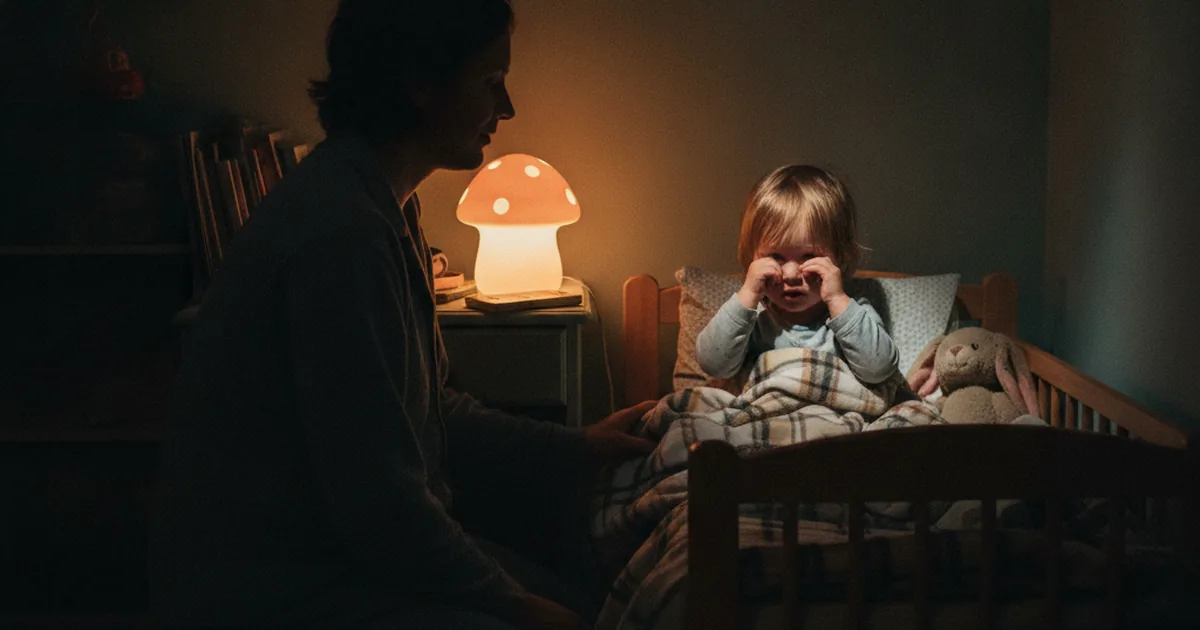
It's one of the odder things a parent runs into: your toddler sits up an hour or two after falling asleep, eyes half-open, whining or crying, maybe pushing you away or mumbling something that doesn't quite make sense — and no amount of “it's okay, mama's here” seems to reach them. A few minutes later they flop back down and sleep peacefully, and in the morning they have no idea it happened. That's a confusional arousal: a strange but ordinary hiccup in how young children's sleep is wired, and one of the most common parasomnias nobody warns you about.
What is a confusional arousal?
A confusional arousal happens when a child's brain starts to surface out of deep, slow-wave sleep but doesn't complete the transition to being properly awake. The result is a strange in-between state: eyes may open, they may sit up, talk, or cry, but they aren't processing what's happening around them the way they would if fully conscious. It typically strikes in the first third of the night, during the deepest stretch of non-dream sleep, which is exactly why it can look so unsettling — your child seems distressed, but they're not having a bad dream and they're not truly awake either.
How is it different from a night terror?
Confusional arousals and night terrors are close cousins — both are partial arousals out of deep non-REM sleep, both happen early in the night, and both leave zero memory afterward. The difference is mostly intensity. A confusional arousal tends to be quieter: whimpering, crying, confused resistance, maybe some incoherent talking, usually settling within 5 to 15 minutes. A night terror is more dramatic: sudden screaming, a racing heart, sweating, sometimes bolting upright or trying to get out of bed, and it can run longer. Some children have one type, some have both, and either can shift into the other from night to night — it's the same underlying mechanism at different volumes.
How is it different from a nightmare?
The same rule of thumb that separates nightmares from night terrors applies here: if your child wakes up and remembers it, it's a nightmare; if they don't wake up and won't remember, it's a confusional arousal. A child in the middle of a nightmare recognizes you, wants to be held, and can usually describe what scared them. A child in a confusional arousal doesn't recognize you in any meaningful way, resists being picked up or soothed, and by morning has no idea any of it happened. Comforting works beautifully for a nightmare and often backfires — or at least doesn't help — for a confusional arousal.
What does a confusional arousal actually look like?
It varies by child, but common signs include: sitting up in bed with a dazed, glassy look; crying or whimpering that seems to have no obvious trigger; moaning, mumbling, or repeating a phrase without making full sense; pushing away a hug or resisting being picked up; and moving slowly or clumsily, as if drunk with sleep. Unlike sleepwalking, most children stay in or near the bed rather than wandering off, though in rarer cases the two can overlap. The episode usually ends the same way it started — abruptly, with the child lying back down and sliding into ordinary sleep, no bridge, no goodbye.
What causes confusional arousals in toddlers?
The single biggest driver is overtiredness. A child who's short on sleep spends more time than usual in deep slow-wave sleep, and more deep sleep means more opportunities for the brain to get stuck halfway through an arousal. An overtired toddler is more prone to confusional arousals, night terrors, and sleepwalking alike, which is one more reason a genuinely early, age-appropriate bedtime pays off. Other common triggers stack on top of overtiredness: an inconsistent schedule, a skipped or shortened nap, fever or illness, sleeping somewhere unfamiliar (a grandparent's house, a hotel), or a loud noise mid-sleep. Confusional arousals also run in families and are especially common in toddlers and preschoolers, since this age group naturally spends a larger share of the night in deep sleep than older kids or adults.
What should I do during one?
The instinct is to scoop your child up, ask what's wrong, and try to talk them out of it — but that's exactly what tends to prolong the episode, because you're trying to reason with a brain that isn't really listening yet. Instead:
- Stay close and keep your voice low, calm, and quiet rather than urgent or loud
- Don't try to fully wake them, question them, or demand they answer you
- Gently steer them away from anything they could trip over or bump into, without forcing physical contact if they're resisting it
- Dim the lights rather than switching on a bright overhead — more stimulation tends to stretch the episode out
- Wait it out. Most confusional arousals resolve within 5 to 15 minutes on their own, and your child settles back into sleep without ever truly surfacing
How can I reduce how often they happen?
You can't eliminate confusional arousals entirely — they're a normal, if odd, feature of a young child's still-developing sleep architecture — but the same handful of habits that protect against night terrors work here too. Protecting an age-appropriate bedtime and avoiding chronic sleep debt is the single most effective lever, since overtiredness is the strongest known trigger. A consistent wake time and a steady daily rhythm also help stabilize how deep sleep is distributed across the night. Keeping the last 20-30 minutes before lights-out calm and screen-free matters too — a bright screen or an overstimulating evening makes it harder for a young nervous system to settle into a normal sleep pattern rather than a fragmented one.
A quiet, screen-dark wind-down — a warm bath, a few books, a calm voice telling a gentle story — gives an overtired brain less to fight against at bedtime. That's the exact gap Sleepy Spell is built for: private, on-device audio bedtime stories with no screen glow and nothing sent off the device, just a soothing voice to help a wound-up toddler settle before sleep. See how it works →
When should I call the doctor?
Occasional confusional arousals in toddlers and preschoolers are developmentally normal and generally need no treatment beyond protecting sleep and keeping bedtime calm. Reach out to your pediatrician if episodes happen most nights, regularly last well beyond 20-30 minutes, involve your child wandering through the house, include loud snoring or pauses in breathing (which can point to something like sleep apnea driving the arousals), or if they start suddenly in an older child or teen who's never had them before. This is general parenting guidance, not medical advice — your pediatrician is the right person to rule out other causes and advise on your specific child.
Frequently asked questions
What is a confusional arousal?
A confusional arousal is a common childhood parasomnia where a child partly wakes out of deep sleep, usually in the first third of the night, and becomes upset, whimpering or crying, and hard to console — all while their brain is still mostly asleep. They may sit up, mumble, or push you away, and they won't respond normally to your voice. It looks alarming but is harmless, and it isn't the same as being fully awake, having a nightmare, or a true night terror.
How is a confusional arousal different from a night terror?
They sit on the same spectrum of deep-sleep parasomnias and share a cause — a partial, incomplete awakening from non-REM sleep — but intensity differs. A confusional arousal is quieter: whimpering, crying, and confused resistance, usually resolving within 5-15 minutes. A night terror is more dramatic: sudden screaming, a racing heart, sweating, and sometimes thrashing or trying to bolt out of bed. Both end with the child settling back to sleep and no memory of it the next day.
How is a confusional arousal different from a nightmare?
The key test is the same one used for night terrors: does your child actually wake up and remember it? With a nightmare, yes — they wake up scared, recognize you, and can describe what frightened them. With a confusional arousal, no — they stay in a fog of deep sleep, don't recognize you or respond to reasoning, and have no memory of the episode by morning, even though their eyes may be open and they may seem to be talking to you.
What should I do if my child has a confusional arousal?
Keep them safe and don't try to fully wake them or talk them out of it — attempts to reason, comfort loudly, or physically restrain a confused, half-asleep child often make the episode last longer. Stay close, keep the room dim and your voice low, gently guide them away from anything they could bump into, and wait. Most episodes pass on their own within a few minutes to about 15 minutes, and your child will drift back into normal sleep and wake up with no memory of it.
What causes confusional arousals in toddlers?
The biggest triggers are overtiredness and an inconsistent sleep schedule, along with anything that deepens sleep even further right beforehand, like fever, a missed nap, travel, or an unfamiliar sleep environment. They're most common in toddlers and preschoolers because this age group spends more time in deep slow-wave sleep, and they often run in families alongside sleepwalking and night terrors. None of it means anything is wrong with your child — it's an immature sleep system briefly getting stuck between stages.
When should I talk to a pediatrician about confusional arousals?
Occasional confusional arousals in toddlers and preschoolers are developmentally normal and don't need treatment. Check in with your pediatrician if episodes happen most nights, last well beyond 20-30 minutes, involve your child leaving the bed or moving through the house, include loud snoring or pauses in breathing, or start suddenly in an older child or teen who never had them before. This is general guidance, not medical advice — your pediatrician can rule out other causes and advise on your child specifically.
Sources
Sleep Foundation — Confusional Arousals: Causes, Symptoms, and Treatment.
American Academy of Pediatrics (HealthyChildren.org) — Nightmares, Night Terrors & Sleepwalking in Children: How Parents Can Help.
ZERO TO THREE — Sleep: What Every Parent Needs to Know.
Petit D, et al. — Dyssomnias and Parasomnias in Early Childhood. Pediatrics, 2007.