Weekend Bedtime Drift: Why Kids Get Social Jet Lag
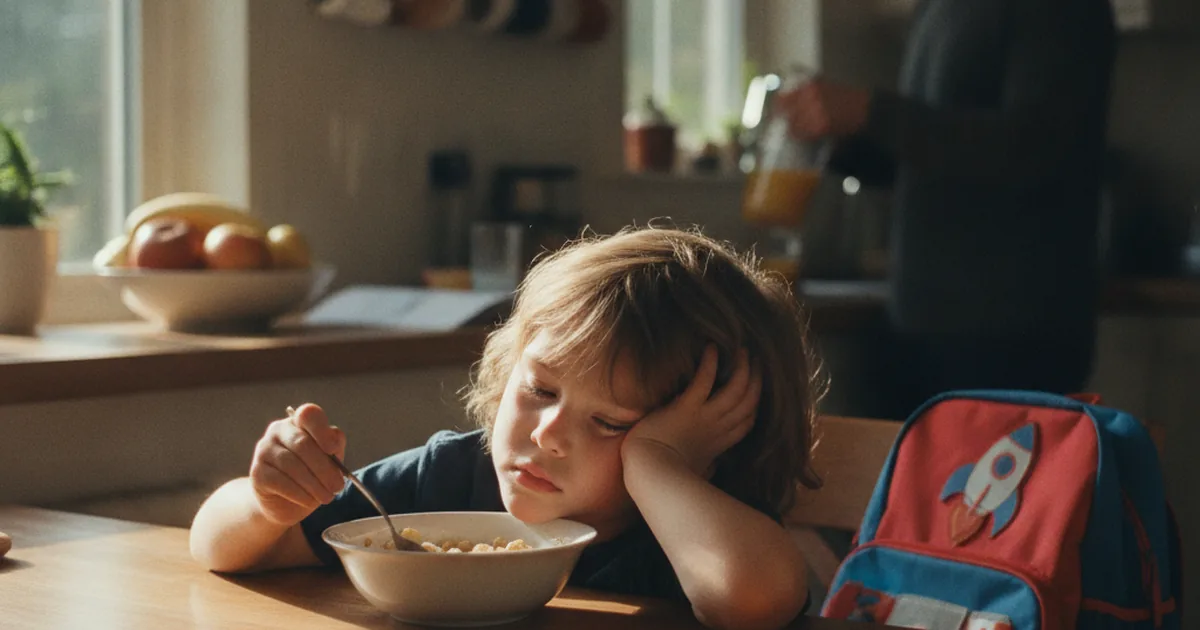
If Monday mornings in your house feel like waking a different, grumpier child than the one who went to bed Sunday, you're not imagining it. There's a real physiological reason a weekend of later nights and lazy mornings makes the first day back at school so much harder than any other weekday — and it's got a name borrowed from travel: social jet lag.
What is social jet lag, and can kids really get it?
Social jet lag describes the gap between a person's biological sleep timing and the schedule their social life actually demands of them. Adults get it from staying up late and sleeping in on weekends, then dragging themselves out of bed for a Monday commute. Kids get the exact same thing: a late Friday movie night, a Saturday sleepover, or just a looser summer-style evening pushes bedtime later, and if wake time slides later too, the body's internal clock shifts to match. Come Monday, the school bell doesn't care that the clock moved — it wants the original wake time back, immediately, with none of the gradual adjustment a real time-zone trip would allow you to plan for.
This isn't just about being a little tired. A shifted circadian rhythm affects alertness, mood regulation, and appetite the same way jet lag does in adults, which is a big part of why Monday mornings can come with more meltdowns, pickier breakfasts, and a generally "off" kid, even after what looked like a well-rested weekend.
How much weekend drift actually causes a problem?
Sleep researchers generally point to roughly an hour of difference between weekday and weekend sleep timing as the threshold where social jet lag effects start showing up. A 20-30 minute later bedtime on a Friday or Saturday is well within normal and rarely worth worrying about. Where it tends to bite is when bedtime slides 90 minutes to two hours later on both weekend nights, especially when it's paired with sleeping in by a similar amount — that combination is what pulls the body clock furthest from Monday's fixed wake-up.
If my child sleeps in on the weekend, doesn't that just make up for lost sleep?
Partly, but it's a trade-off worth understanding rather than a free win. Sleeping in does repay some of the sleep debt built up from short weeknights, which is genuinely useful — a chronically under-slept child benefits from catching up. The cost is that sleeping in also drags the body clock later, and a later body clock is precisely what makes Monday's early alarm feel so brutal. A gentler way to repay the same debt is to add sleep at the front end instead: an earlier bedtime, especially on Sunday night, adds hours without shifting the clock nearly as much as a late wake-up does.
Why is Monday specifically the roughest morning?
By Sunday night, two nights of later bedtimes and later mornings have usually shifted a child's internal clock by 30-90 minutes. Monday's wake time then snaps straight back to the original school-day hour with no runway — unlike the gradual one-to-two-week reset families use going into a new school year, a weekend shift happens in just two nights and gets reversed in one. That abruptness is what makes Monday mornings feel disproportionately hard compared to, say, Wednesday: it's the same jolt as landing after a short flight east and being expected to function immediately on arrival. The good news is that, like ordinary jet lag, it's usually mild and clears within a day or two once the school-week schedule re-anchors the clock.
Does this affect toddlers and preschoolers too?
Less than school-age kids, usually. Toddlers and preschoolers tend to be naturally protected from big weekend drift because naps and early-riser body clocks keep their schedules fairly consistent regardless of the day of the week — a two-year-old who wakes at 6:15 most days will often do the same on a Saturday whether or not bedtime slipped the night before. The clearest social jet lag effect shows up once a fixed external demand enters the picture, which for most families means school: a non-negotiable Monday wake time is what creates the mismatch to fall into in the first place.
How do I protect weekends without banning the fun stuff?
You don't need a rigid, joyless weekend schedule to avoid this. The single most effective lever is protecting wake time, not bedtime:
- Let bedtime flex a little. A late family movie or a birthday party running past the usual lights-out is fine on its own; it's rarely the sole cause of a rough Monday.
- Keep wake time within about 30-60 minutes of the weekday time, even after a later night. This is the part that actually keeps the body clock from sliding.
- Use Sunday night to repay the debt. An earlier bedtime on Sunday — even 20-30 minutes earlier than usual — adds back sleep without shifting the clock further, and gives the body a head start into Monday.
- Keep the wind-down routine identical even when the clock time shifts. A familiar sequence — bath, book or a quiet audio story, lights out — sends the same "time to sleep" signal to the body regardless of whether it's happening at 7:30 or 8:15, which makes both the late night and the return to normal easier on everyone.
- Get morning light back on track fast. Bright light shortly after waking is one of the strongest signals for resetting the body clock, so an outdoor moment or open curtains on Monday morning helps more than it might seem.
None of this means weekends have to look identical to weekdays — that would defeat the point of a weekend. It just means treating the morning as the anchor and letting the evening be the flexible part, rather than the other way around.
Note: This is general parenting guidance, not medical advice. If Monday sluggishness, mood swings, or sleep resistance are severe, persistent well beyond the first school day, or paired with other concerns, check with your pediatrician.
Your child's privacy: No child data is sent - just the story request. How we protect your child's privacy.
Frequently asked questions
What is social jet lag in kids?
Social jet lag is the mismatch between a child's body clock and the schedule their social life (weekday school, weekend activities) actually demands. When bedtime and wake time drift an hour or more later on Friday and Saturday nights, the body clock shifts with them, so Monday's early alarm arrives while the child's internal body time still thinks it's the middle of the night — the same mismatch adults feel flying across time zones, just caused by the calendar instead of a plane.
How much weekend bedtime drift is too much?
Sleep researchers generally consider a shift of more than about an hour between weekday and weekend sleep timing enough to produce real social jet lag effects. A 20-30 minute drift on Friday or Saturday night is usually harmless and even reasonable; drifting 90 minutes to two hours later, especially on both weekend nights, is what tends to produce a genuinely rough Monday.
Can my child catch up on sleep by sleeping in on the weekend?
Only partially, and it comes at a cost. Sleeping in does repay some of the sleep debt from a short weeknight, but it also pushes the body clock later, which is exactly what creates the Monday-morning mismatch. A better trade-off is an earlier bedtime to add sleep, rather than a later wake-up, since it repays the debt without dragging the whole clock off schedule.
Why is my child so cranky on Monday mornings specifically?
Monday is when the mismatch is largest: two nights of later bedtimes and later wake-ups have shifted the body clock later, and then the school-day alarm suddenly demands the original early time again, with no gradual runway like a weekday would give. It's the same abrupt jolt as flying east and being expected to function on arrival — mild social jet lag, cleared within a day or two once the schedule re-anchors.
Does social jet lag affect toddlers and preschoolers too, or just school-age kids?
It affects any child whose weekend schedule (later nights out, a skipped nap, sleepovers, screen time) meaningfully differs from their weekday one, though school-age kids tend to show the clearest Monday effect because school imposes a fixed, non-negotiable wake time. Toddlers and preschoolers are usually more protected simply because naps and early risers keep weekend schedules closer to weekday ones by default.
What's the easiest way to prevent weekend sleep drift without banning fun weekend plans?
Keep wake time within about 30-60 minutes of the weekday time even after a later bedtime, and let a slightly earlier Sunday bedtime absorb the debt. That single lever — protecting the morning, not the evening — preserves most of the weekend's flexibility (later dinners, a special outing, a bit of extra playtime) while keeping the body clock close enough to the school-week anchor that Monday isn't a shock.
Sources
Sleep Foundation — Social Jet Lag.
Sleep Foundation — Circadian Rhythm.
American Academy of Pediatrics (HealthyChildren.org) — Healthy Sleep Habits: How Many Hours Does Your Child Need?.
ZERO TO THREE — Sleep Resources for Parents.