Nighttime Potty Training Without Wrecking Everyone's Sleep
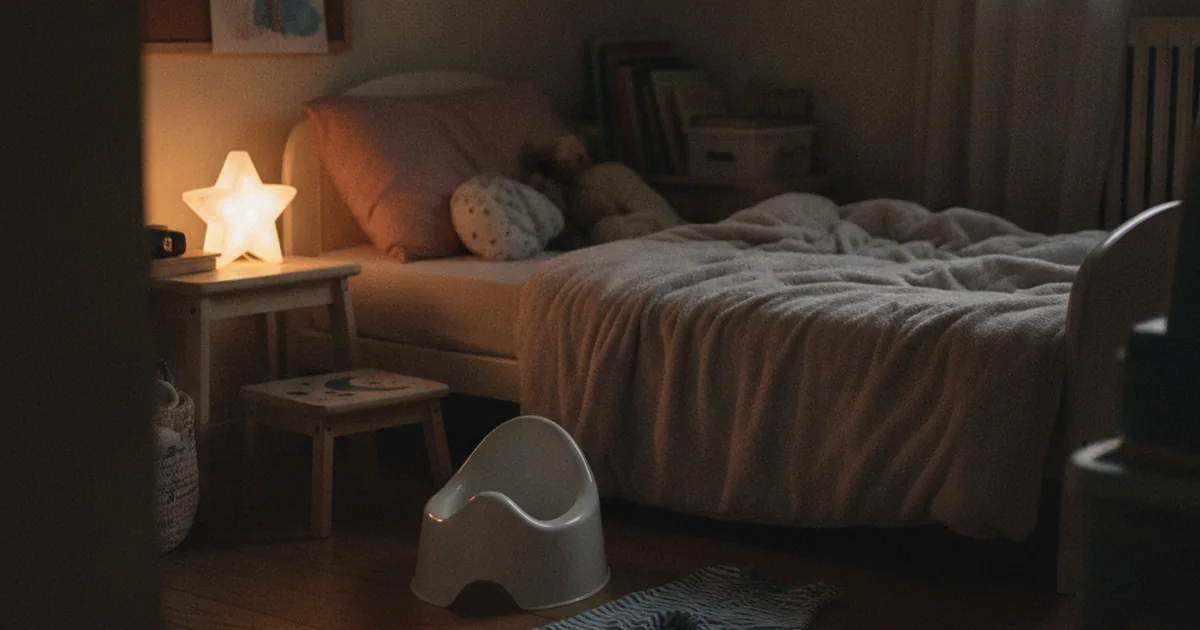
When should nighttime potty training actually start?
Later than most parents expect, and later than daytime training. Daytime dryness is mostly a learned skill: noticing the urge, getting to the toilet, and choosing to go. Nighttime dryness is different — it depends on a child's bladder growing large enough to hold urine through a long stretch of sleep, or on their brain waking them when it's full, both of which are physical developments that happen on their own biological timeline rather than through practice. The American Academy of Pediatrics notes that many children aren't reliably dry at night until age 4 or later, sometimes well into early elementary school, even when daytime training was smooth and early.
The practical takeaway: there's rarely a benefit to pushing nighttime training before your child is showing it themselves. Waking up dry on their own most mornings, noticing and mentioning a wet diaper, or asking to skip the overnight diaper are the signals worth watching for — not a calendar date.
Why does this stage disrupt sleep so much?
Because almost every approach to nighttime training touches sleep directly. Families who do scheduled overnight wake-to-pee trips are, by definition, interrupting sleep on purpose for both child and parent. Families who wait for natural readiness still deal with wet-sheet changes, which mean flipping on lights, changing pajamas, and re-settling a groggy, sometimes upset child in the middle of the night — and then resettling themselves afterward. Either path adds real sleep disruption for a period that typically runs from a few weeks to a couple of months before the new pattern (dry, or a quick low-drama change) settles in.
It's worth naming this plainly at the start of the process: a few rough weeks of broken sleep during nighttime training is common and expected, not a sign the approach isn't working.
How do I know my child is ready?
A few reliable signs tend to show up together: waking up with a dry diaper or pull-up most mornings, a diaper that's only lightly damp rather than saturated after a full night, noticing and commenting on being wet, or asking to try underwear at night. If diapers are still soaked through most mornings, that's usually a sign the bladder simply isn't there yet, and starting training now is more likely to mean weeks of broken sleep with little payoff than an early success.
It's also fine, and common, for daytime and nighttime training to be separated by a long gap. A child can be confidently, independently dry all day and still need a diaper or bedwetting brief at night for a year or more afterward. That gap isn't a regression in either direction — it reflects two genuinely different skills maturing at different rates.
What actually helps protect sleep during the transition?
Keep the overnight response boring. When a wet-sheet change happens at 2 a.m., use the dimmest light that lets you see, keep your voice low and matter-of-fact, and change and re-settle as quickly as you reasonably can. A calm, low-stimulation response helps your child fall back asleep faster and avoids accidentally turning the middle of the night into an exciting, attention-getting event.
Limit fluids in the hour or two before bed, while still offering normal amounts earlier in the evening — the goal is an emptier bladder at lights-out, not dehydration.
Add a bathroom stop to the very end of the wind-down, right before the last story or song, so it's the last thing that happens before sleep rather than something squeezed in earlier and forgotten.
Protect the mattress, not just the pajamas. A waterproof mattress cover means a wet night becomes a quick sheet swap instead of a longer cleanup, which keeps the middle-of-the-night disruption as short as possible for everyone.
Don't let training collide with other big changes. Starting nighttime training during a crib-to-bed transition, a house move, or a new sibling's arrival usually means more disrupted sleep than either change would cause on its own. Where you have some choice in timing, spacing these out helps.
A steady, unhurried wind-down also matters more here, not less, since a child's sleep is already being interrupted more than usual. Sleepy Spell's private, screen-dark audio stories are designed to be that same calm, screen-dark cue every night — useful both for the pre-bed routine and for helping a child settle back down quickly after a middle-of-the-night change, since the familiar voice and pattern don't require turning on a bright screen.
What if wet nights are still frequent after months?
That's still within a wide range of normal for young children. Nighttime dryness typically arrives later and more gradually than daytime training, and a mix of dry and wet nights for a long stretch, sometimes six months or more, is common rather than a sign something is wrong. It's also worth checking whether disrupted sleep has another layered cause — an unrelated sleep regression, new bedtime anxiety, or simply frequent night wakings that would be happening with or without the potty-training stage layered on top.
This post reflects general guidance on nighttime potty training and children's sleep and isn't medical advice. If nighttime wetting is frequent and persistent well past age 7, starts suddenly after a long dry stretch, or comes with daytime symptoms like pain or unusual thirst, check in with your pediatrician.
Frequently asked questions
What age should nighttime potty training start?
Most children aren't developmentally ready for nighttime dryness until well after daytime training is solid, often somewhere between age 3 and 5, and sometimes later. Nighttime control depends on a child's bladder maturing enough to hold urine for eight to ten hours or to wake from sleep when it's full, which is a physical milestone rather than something that can be taught early through practice.
My child is dry all day. Why are nights still wet?
This is extremely common and not a sign anything has gone wrong. Daytime dryness relies on a child noticing the urge and choosing to act on it while awake; nighttime dryness relies on bladder capacity and hormone regulation that develop on their own timeline, often a year or more after daytime training finishes. The two skills are only loosely related.
Should we use pull-ups at night during this stage, or go without?
There's no single right answer. Many families keep a nighttime pull-up or bedwetting brief in place until a child has shown several dry mornings in a row on their own, since it protects everyone's sleep and avoids the disruption of full sheet changes. Others switch to underwear once dry stretches are consistent, as a concrete signal of progress. Either approach is fine; what matters most is not switching back and forth in response to a single wet night, which mostly just adds confusion.
How many wake-ups should we expect during nighttime training?
It varies a lot by child and by method. A family doing scheduled overnight wake-to-pee trips might expect one or two planned wakings a night for a few weeks. A family waiting for natural readiness may have very few extra wake-ups, just the occasional wet-sheet change. Either way, expect this stage to add some broken sleep for a period of weeks to a couple of months before it settles.
Is occasional bedwetting after starting nighttime training normal?
Yes. Even after a child starts having mostly dry nights, occasional wet nights are typical for months, especially during illness, big life changes, or overtiredness from a skipped nap or late bedtime. A single wet night or an occasional cluster of them isn't a setback worth worrying over; it becomes worth a conversation with a pediatrician mainly if wetting is frequent and persistent well past age 7.
When should we talk to a pediatrician about nighttime wetting?
Most pediatric guidance treats nighttime wetting as within the range of normal up to around age 7, since bladder maturity varies widely between children. It's worth a conversation sooner if wetting starts suddenly after a long stretch of dry nights, is paired with daytime symptoms like pain or unusual thirst, or is causing significant distress to your child, since those patterns can point to something separate from ordinary developmental timing.
Sources
American Academy of Pediatrics (HealthyChildren.org) — Toilet Training.
National Institute of Diabetes and Digestive and Kidney Diseases (NIDDK) — Bedwetting in Children.
ZERO TO THREE — Potty Training Tips for Parents of Toddlers.
Sleep Foundation — Toddler Sleep: What to Expect.