Why Does My Toddler Wake Up Multiple Times a Night?
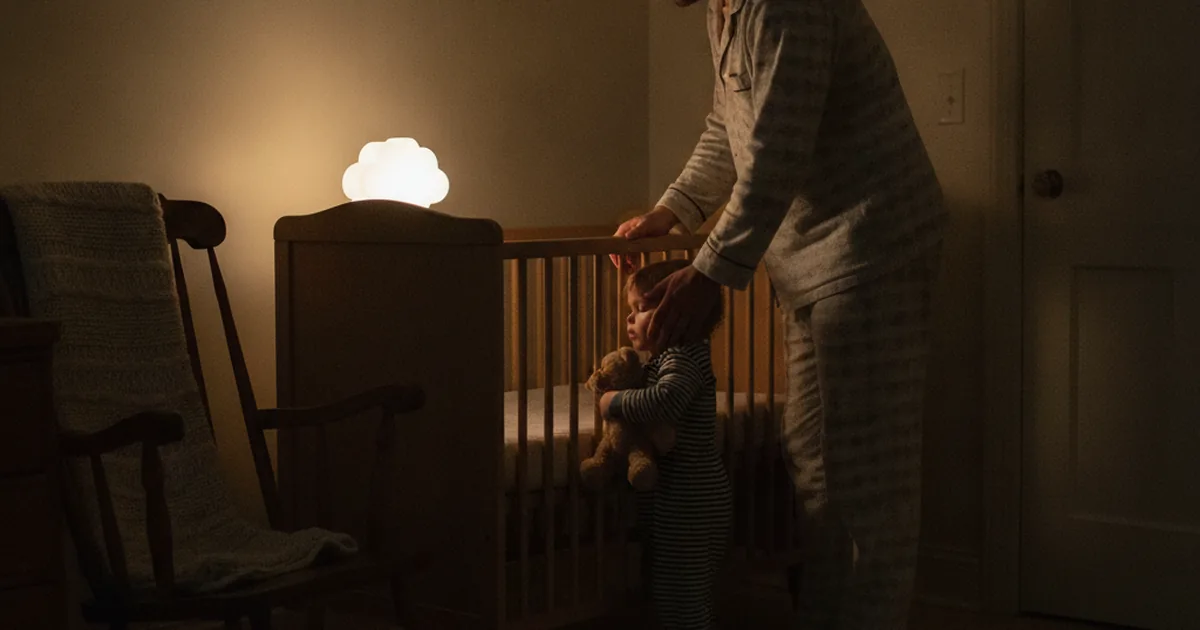
How many times is it normal for a toddler to wake up at night?
Every toddler surfaces briefly between sleep cycles multiple times a night — that's true for adults too, and most of the time it's so brief that nobody remembers it in the morning. What parents actually mean by “waking up multiple times a night” is usually something more specific: a toddler who fully wakes, cries out, and needs a parent to come in, feed, rock, or lie down with them before they'll settle again, and who does this more than once or twice on most nights. That pattern is common, especially between one and three years old, but it's not something toddlers simply grow out of on their own — it tends to persist until whatever is prompting the full wake-up changes.
What's actually waking my toddler up so often?
A handful of causes account for most frequent night waking, and they're worth ruling in or out one at a time rather than guessing.
A learned sleep association. This is the single most common driver past infancy. If a toddler falls asleep at bedtime being rocked, fed, or with a parent lying beside them, that's the only way their brain knows how to get back to sleep — so every natural, brief stir between cycles turns into a full wake-up until that same condition is restored. This isn't a flaw in the child; it's simply what they've practiced every night at bedtime, and it shows up again at every waking.
A changed environment. A nightlight on a timer that switches off, a sound machine that stops, a door left open at bedtime that gets closed later, or a room that cools noticeably by 2 a.m. can all wake a toddler who then can't work out why things feel different from when they fell asleep.
Overtiredness or undertiredness. Both a toddler who's overtired at bedtime and one who's still getting too much daytime sleep for their age can end up with more fragmented, easily-interrupted sleep overnight. Nap length and timing are worth checking against age norms before assuming the cause is purely behavioral.
Separation anxiety and a bid for connection. Especially between one and three, a toddler's growing awareness of being apart from a parent can turn a brief stir into a genuine need to check someone is still there. This tends to cluster around developmental leaps and eases as independence grows, but it can also become a nightly habit if it's reinforced with a long, engaging response every time.
Hunger, thirst, or minor discomfort. Less common past the first year, but real: a toddler who ate very little at dinner, is teething, or is coming down with something can wake more than usual for a few nights. This kind of waking usually resolves within a few days as the trigger passes, unlike a habit-driven pattern.
Nightmares. True nightmares are less frequent than habit-driven wakings but do happen, especially from age two onward as imagination develops. They're worth telling apart from night terrors, since the response that helps is different for each.
How should I respond in the moment without making it worse?
The instinct to rush in and do whatever stops the crying fastest is completely understandable at 2 a.m., but the response in the moment is often what determines whether a waking pattern fades or repeats. A brief pause of a minute or two before going in gives a toddler a chance to resettle on their own, which happens more often than exhausted parents expect. When you do go in, keep it short, calm, and close to boring — a few quiet words, a hand on the back, minimal conversation or negotiation — rather than turning it into snuggle time, a full feed, or a long chat, all of which give a toddler a reason to want to repeat the waking tomorrow.
Consistency matters more than any specific technique. A response that's calm and brief one night and a full hour of rocking the next teaches a toddler that persistence eventually gets the bigger response, which tends to increase wakings rather than reduce them. Whatever you choose to do, doing the same thing every time is what actually moves the needle, usually within one to two weeks.
Building independent resettling skills
The longer-term fix for most frequent night waking is helping a toddler learn to fall back asleep the same way they'd ideally fall asleep at bedtime — on their own, in their own space, without a parent's active involvement each time. That starts with the beginning of the night: if a toddler falls asleep independently at bedtime, they're far more likely to resettle independently at 2 a.m., because that's the skill their brain already has on hand. If bedtime currently requires a parent's presence the whole way to sleep, that's usually the better starting point before tackling the night wakings themselves — several gentle, evidence-based approaches can help build that skill gradually.
A steady, calm wind-down that sounds and feels the same every night also gives a toddler something familiar to return to if they do wake — the same voice, the same quiet story, the same dark, screen-free room. Sleepy Spell's private, screen-dark audio stories are built around exactly that consistency: no screen glow to fully wake a drowsy toddler, no new content that overstimulates, just the same gentle bedtime experience each night that a child can eventually associate with settling, whether that's at 7 p.m. or 2 a.m.
When does frequent night waking need a doctor's opinion?
Most frequent night waking is behavioral and responds well to a consistent routine within a few weeks. It's worth a conversation with your pediatrician if waking is sudden and severe with no clear trigger, if it's paired with loud snoring, gasping, or pauses in breathing (which can point to something like enlarged tonsils or adenoids), if there are signs of pain or illness, or if a calm, consistent approach hasn't helped after several weeks of genuinely sticking with it.
This post reflects general toddler sleep guidance and isn't medical advice. If night waking is severe, sudden, or paired with breathing changes, pain, or other concerning symptoms, talk with your pediatrician.
Frequently asked questions
Is it normal for toddlers to wake up multiple times a night?
Brief awakenings between sleep cycles are completely normal at any age, including for adults — most toddlers stir several times a night without anyone noticing because they resettle themselves within seconds. It becomes a problem worth addressing specifically when those brief stirs turn into full, crying wake-ups that need a parent's help to resolve, several times a night, on most nights.
What's the difference between frequent night waking and a sleep regression?
A sleep regression is a sudden change from previously solid sleep, usually tied to a developmental leap, and it tends to resolve within two to six weeks on its own. Frequent night waking that has been going on for months, with no clear developmental trigger, is more often a sleep-association habit — something a toddler has learned they need in order to fall back asleep, like rocking, feeding, or a parent physically present.
Should I go to my toddler every time they wake up at night?
It depends on what you're trying to teach. Responding quickly is completely reasonable for a toddler who is frightened, unwell, or new to a change, but going in immediately every single time, especially with a long comforting routine, can accidentally reinforce that waking up is the way to get attention or company. A brief pause before responding, and a short, calm, boring response when you do, tends to reduce wakings faster over time.
Can hunger or thirst really cause repeated night wakings?
Yes, though it's less common past the first year once toddlers are eating regular meals. A toddler who ate very little at dinner, skipped a snack, or is in a growth spurt can genuinely wake up hungry or thirsty. Offering a small protein-rich bedtime snack and easy access to water can rule this out before assuming the cause is behavioral.
How long does it take to reduce frequent night wakings?
Most families see a meaningful drop within one to two weeks of consistently changing how they respond, and further improvement over three to four weeks, provided the response stays the same every single time. Inconsistent responses — calm one night, full intervention the next — are the most common reason progress stalls or wakings creep back up.
When should I talk to a doctor about my toddler's night waking?
Check in with your pediatrician if waking is sudden and severe, paired with snoring, gasping, or breathing pauses, comes with signs of pain or illness, or hasn't improved after several weeks of a consistent, calm routine. Loud snoring or labored breathing during sleep is worth mentioning even on its own, since it can point to something like enlarged tonsils that's worth ruling out.
Sources
Mindell JA, et al., "Behavioral Treatment of Bedtime Problems and Night Wakings in Infants and Young Children" — Sleep, National Library of Medicine (PubMed).
American Academy of Pediatrics (HealthyChildren.org) — Healthy Sleep Habits.
Sleep Foundation — Toddler Sleep: What to Expect.
ZERO TO THREE — Sleep: What Every Parent Needs to Know.