How to Help a Sick Child Sleep Through a Cold, Cough, or Fever
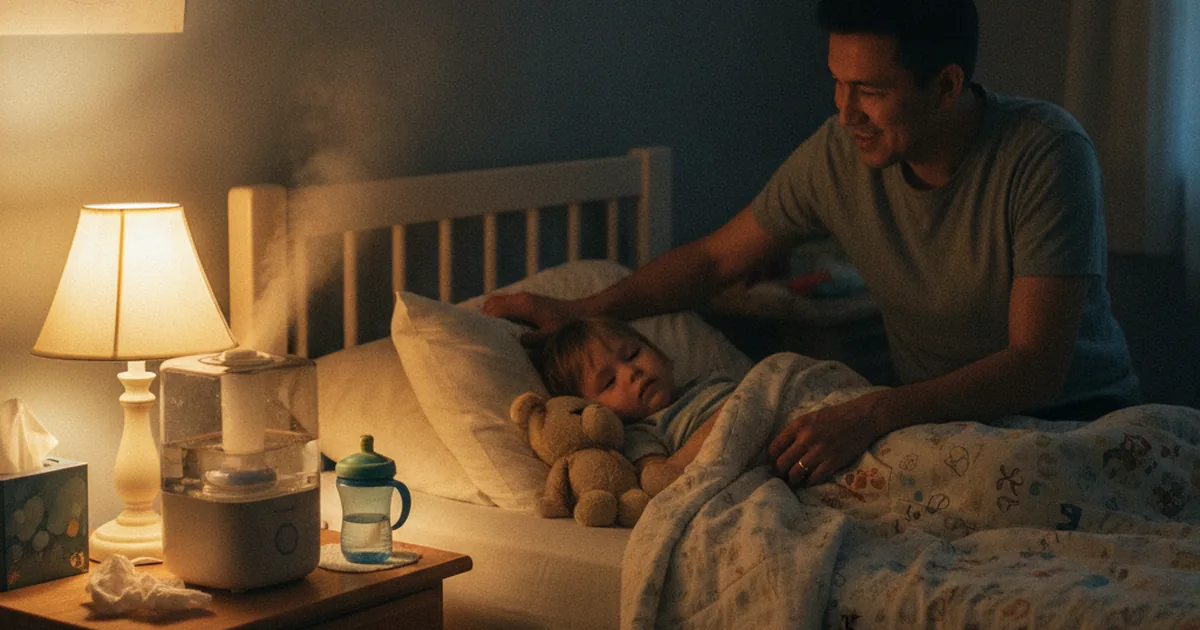
Why does being sick wreck a child's sleep so fast?
A cold or fever doesn't just make your child feel bad during the day — it directly interferes with the mechanics of sleep. A stuffy nose forces mouth-breathing, which dries out the throat and triggers coughing. Lying flat lets mucus pool in the back of the throat instead of draining, which is why coughing fits often cluster right after your child lies down. A fever can cause chills, sweating, and general discomfort that makes it hard to settle. None of this means anything has gone wrong with your child's sleep habits — it's just what illness does to a body that's trying to rest, and it usually resolves as the cold runs its course.
Is it safe to elevate a sick child's head at night?
The answer depends heavily on age. For babies under 12 months, the safe-sleep rule doesn't change for illness: no pillows, wedges, rolled blankets, or crib elevation devices, even if you think it would help them breathe easier. Loose items in a crib remain a suffocation risk regardless of how congested a baby is, so the safer moves are a cool-mist humidifier near (not in) the crib and saline drops before naps and bedtime.
For toddlers and older kids sleeping in a regular bed, an extra pillow or a slight incline is generally fine and can genuinely help — gravity keeps mucus moving toward the throat to be swallowed or coughed up, rather than pooling and triggering a cough reflex the moment they lie flat. Some parents find a slightly reclined position in a chair or on a couch cushion, supervised, gets a rough coughing spell to settle before moving back to bed.
What actually helps a coughing child sleep?
A short list of things with real evidence behind them: a cool-mist humidifier running in the bedroom overnight, saline nasal drops or a gentle rinse before bed to clear congestion, and plenty of fluids during the day to thin mucus. For children over 1 year old, a spoonful of honey before bed is a well-studied home remedy — several trials have found it eases nighttime cough about as well as some over-the-counter cough syrups, with far less risk. (Never give honey to a baby under 12 months, because of the risk of infant botulism.)
What's worth skipping: over-the-counter cough and cold medicines for children under 4, and a call to your pediatrician before using them at all under age 6. Major pediatric guidance advises against routine use in young children because the risks and side effects generally outweigh a modest benefit, and they don't shorten the illness itself.
Should you wake a sick child to give medicine?
Usually not. Sleep is one of the more useful things a recovering body can do, and interrupting it just to treat a fever number — rather than genuine discomfort — often does more harm than good. Most pediatric guidance treats how a child is acting as the better guide than the exact number on the thermometer: a child who's sleeping soundly, breathing normally, and not in obvious distress usually doesn't need to be woken. The exceptions are when your pediatrician has given you a specific reason to wake them, or when your child seems genuinely uncomfortable, unusually hot, or something feels wrong — trust that instinct.
Why fevers and coughs seem to get worse at night
Almost every parent notices this pattern, and it's not your imagination. A few ordinary things stack up after dark: the body's natural anti-inflammatory hormones dip overnight, lying flat lets mucus pool instead of draining the way it does while upright during the day, and a quiet, dark room strips away all the daytime distractions that were masking how uncomfortable your child actually feels. The illness itself usually isn't progressing — nighttime just makes the same symptoms much harder to ignore, for your child and for you.
Keeping some routine even on a rough night
It's tempting to throw the whole bedtime routine out during a sick stretch — extra screen time, a much later bedtime, whatever gets everyone through the night. A little flexibility is fine, but keeping the bones of the routine (dim lights, a calm wind-down, the same order of steps) actually helps, because a sick child's nervous system is already working overtime; a predictable, low-stimulation ending to the day gives it one less thing to fight. This matters even more if congestion or coughing is already causing more frequent wakings than usual, since a familiar routine makes it easier for a child to resettle each time.
This is where a warm voice in a dark room earns its keep. Sleepy Spell's private, screen-dark audio stories don't add a bright screen right when your child's eyes and body most need to wind down, and the consistency of a familiar story can be genuinely soothing on a night when little else feels normal. It's not a treatment for illness — just one less disruption on a night that already has plenty.
When should you call the doctor?
Call promptly for a fever in a baby under 3 months old, a fever above 104°F (40°C) at any age, signs of breathing difficulty such as fast breathing, the chest pulling in with each breath, wheezing, or bluish lips, unusual drowsiness or trouble waking, a fever that lasts more than 2–3 days, or if anything just feels off to you as a parent. Loud, labored breathing or breathing pauses during sleep are worth a closer look on their own, even outside of an acute illness — we cover those warning signs in more detail in snoring and sleep apnea in kids.
This post reflects general parenting guidance and isn't medical advice. If you're worried about your child's symptoms — day or night — please contact your pediatrician, who can examine your child and advise on next steps specific to them.
Frequently asked questions
Is it safe to prop up a sick child's head at night?
It depends on age. For babies under 12 months, never add a pillow, wedge, or extra padding to the crib — loose bedding and elevation devices are a suffocation risk under safe-sleep guidelines, even during illness. For toddlers and older kids sleeping in a regular bed, an extra pillow or a slight incline can help mucus drain instead of pooling in the throat, which often eases nighttime coughing.
What actually helps a coughing child sleep through the night?
A cool-mist humidifier in the bedroom, saline drops or a rinse before bed to clear the nose, and extra fluids during the day all help. For kids over 1 year old, a spoonful of honey before bed is a well-studied home remedy that can calm a cough about as well as some over-the-counter options. Avoid over-the-counter cough and cold medicines for children under 4, and check with your pediatrician before giving them to kids under 6, since major pediatric guidance advises against their routine use in young children.
Should I wake my child to give fever-reducing medicine at night?
Generally no. Sleep supports recovery, and waking a comfortable, sleeping child just to treat a fever number usually isn't necessary — most pediatric guidance focuses on how a child is acting, not the number on the thermometer. Wake them only if your pediatrician has told you to for a specific reason, or if they seem genuinely uncomfortable, very hot, or you're concerned.
Does a humidifier really help a stuffy nose at night?
Yes, moderately. A cool-mist humidifier adds moisture to dry indoor air, which can loosen mucus and soothe an irritated throat and nasal passages, making congestion and coughing somewhat less disruptive to sleep. It won't cure a cold, but it's one of the simplest home comfort measures with broad pediatric support — just clean it regularly so it doesn't grow mold or bacteria.
Why do fevers and coughs often seem worse at night?
A few ordinary factors stack up after dark: the body's natural anti-inflammatory hormones dip overnight, mucus pools in the throat when lying flat instead of draining while upright, and a quiet, dark room makes every cough and sniffle more noticeable to both child and parent. The illness usually isn't actually getting worse — nighttime just removes the daytime distractions that were masking the symptoms.
When should I call the doctor about a sick child's nighttime symptoms?
Call promptly for a fever in a baby under 3 months old, a fever above 104°F (40°C) at any age, signs of breathing difficulty (fast breathing, chest pulling in with each breath, wheezing, or bluish lips), unusual drowsiness or trouble waking, a fever lasting more than 2–3 days, or whenever something feels off. This isn't medical advice — when in doubt, your pediatrician or a nurse line can tell you quickly whether a symptom needs same-night attention.
Sources
American Academy of Pediatrics (HealthyChildren.org) — Fever and Your Child.
American Academy of Pediatrics (HealthyChildren.org) — Coughs and Colds: Medicines or Home Remedies?.
Sleep Foundation — Toddler Sleep.
ZERO TO THREE — Sleep: What Every Parent Needs to Know.