Teething and Sleep: Why Nights Get Rough (and How to Help)
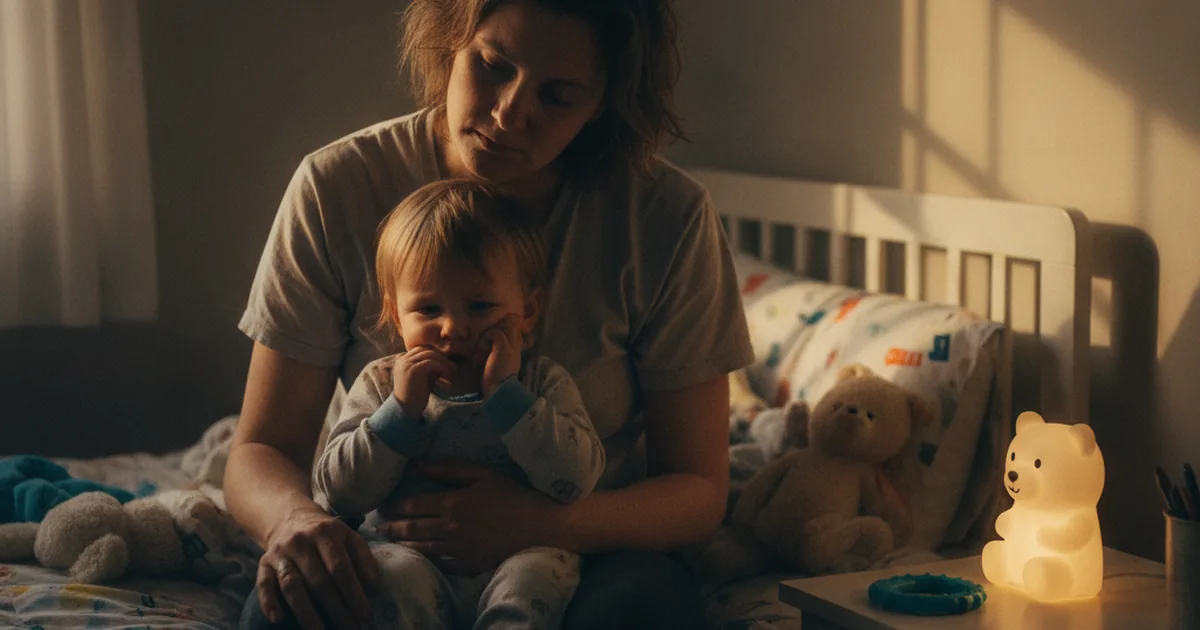
How do I know if it's actually teething and not something else?
Teething has a fairly recognizable pattern once you've seen it: swollen or reddened gums, sometimes with a visible white bump where a tooth is about to break through, heavy drooling, a strong urge to chew on fingers, toys, or crib rails, one flushed cheek, and a mild, generalized crankiness that shows up during the day as well as at bedtime. It tends to intensify in the day or two right before a tooth emerges and then fade.
What teething does not reliably cause, despite the folk wisdom, is a true fever over 101°F (38.3°C), diarrhea, vomiting, rash, or a runny nose with congestion. Research on teething symptoms has consistently found these aren't caused by teething itself — they're more likely a coinciding illness, since teething often overlaps with a stretch when a baby's maternal immunity is fading and everything is going in their mouth anyway. If your toddler has any of these alongside the drooling and fussing, treat it as a separate issue worth mentioning to your pediatrician rather than waiting it out.
Which teeth cause the worst sleep disruption?
Not all teeth are equal. The first teeth, usually the lower central incisors, can be uncomfortable but often pass with barely a ripple in sleep. The teeth that tend to cause real nighttime trouble are the molars, which typically arrive between 13 and 33 months in a few predictable waves: first molars around 13–19 months, canines around 16–23 months, and second (2-year) molars around 23–33 months. Molars are bigger, push through more gum tissue, and often surprise parents who assumed the hard part of teething was long behind them.
If your toddler was an easy teether as a baby but is suddenly having rough, wakeful nights again somewhere in their second or third year, the 2-year molars are a very common, very normal explanation.
What actually helps a teething toddler settle at night?
A short list of things reliably takes the edge off, and it's worth having them ready before bedtime on a rough night rather than scrambling at 1 a.m.
Cold, safe counter-pressure. A chilled (not frozen — frozen can bruise soft gums) solid teething ring, a clean cold washcloth to chew on, or firm, gentle massage on the gums with a clean finger all interrupt the pain signal and are the most evidence-backed non-medication options.
Weight-dosed pain relief, when needed. For a toddler who's genuinely uncomfortable rather than mildly fussy, an appropriately dosed dose of infant or children's acetaminophen, or ibuprofen for children over 6 months, is generally considered reasonable by pediatric guidance. Confirm the dose with your pediatrician or pharmacist based on your child's current weight, and use it as needed on the hard nights rather than as a standing bedtime habit.
Extra, brief comfort — without a new routine. It's fine to offer a little more closeness on a genuinely painful night. The goal is to keep that comfort short and not accidentally build a new bedtime requirement, like feeding to sleep or lying down with your toddler the whole night, that has to be unwound once the tooth is through.
What should I avoid using?
A few popular remedies are worth skipping. The FDA has specifically warned against topical benzocaine gels (like some Orajel products) and homeopathic teething tablets or gels for children under 2, citing rare but serious safety concerns, including a risk of a dangerous blood condition with benzocaine. Amber teething necklaces are a choking and strangulation hazard and aren't recommended by pediatric health organizations, whatever soothing effect is claimed for them. When in doubt, cold and gentle pressure beats anything applied or swallowed.
Should I change the bedtime routine while my toddler is teething?
Keep the shape of the routine itself steady — the same bath, the same wind-down, the same story at the same time — since that predictability is exactly what helps a toddler settle even on an uncomfortable night. What you can adjust is building in a few extra minutes right before the routine starts for gum relief: a chilled teether, a gentle massage, or a dose of pain reliever timed so it's working by lights-out.
A calm, familiar wind-down matters even more on a teething night, when everything already feels a little off. Sleepy Spell's private, screen-dark audio stories keep that part constant — no screen glow to further wind up an already-uncomfortable toddler, just the same gentle voice and story pattern every night, whether teeth are cooperating or not. It's one less thing that has to change while the tooth does its work.
How long does teething sleep disruption actually last?
For most toddlers, the roughest nights cluster in the day or two right before a tooth breaks the surface and ease within three to five days after. If a rough patch has been dragging on for a week or longer with no new tooth to account for it, it's worth stepping back and considering whether the real driver has shifted — an illness that started around the same time, a developmental leap, or a sleep-association habit that formed during the disrupted stretch and is now outlasting the original cause. That last one is common: comfort that made sense on night one of real pain can quietly turn into a nightly expectation by night ten.
When should I call the doctor?
Reach out to your pediatrician if your toddler has a true fever above 101°F (38.3°C), a rash, diarrhea, vomiting, or seems more than mildly unwell — none of these are caused by teething and deserve their own evaluation. It's also worth a call if disrupted sleep has gone on for more than a week without a tooth actually appearing, or if pain seems severe despite cold relief and appropriately dosed medication.
This post reflects general teething and toddler sleep guidance and isn't medical advice. Always confirm medication dosing with your pediatrician or pharmacist, and check in with your doctor about any fever, rash, or symptoms that don't fit ordinary teething.
Frequently asked questions
How can I tell if it's teething and not something else keeping my toddler up?
Teething discomfort usually comes with visible clues: swollen or reddened gums, heavy drooling, a tendency to chew on everything, one flushed cheek, and mild irritability during the day as well as at night. It also tends to cluster tightly around the days a new tooth is actually pushing through and settle within a few days. A true low fever (over 101°F/38.3°C), rash, diarrhea, or a cold are not caused by teething and are worth mentioning to your pediatrician rather than assumed away.
Which teeth cause the worst sleep disruption?
The molars, usually arriving between 13 and 33 months, tend to cause the most disrupted sleep because they're larger and push through more gum tissue than the front teeth did. Many parents notice a rough patch again with the 2-year molars, sometimes the last teeth to come in, even if earlier teething was relatively easy.
Is it safe to give my toddler pain medicine before bed for teething?
For a toddler in genuine discomfort, a pediatrician-approved, weight-dosed amount of infant or children's acetaminophen or ibuprofen (for children over 6 months) is generally considered appropriate and can be timed before bed on a rough night. Confirm dosing and any age or weight limits with your pediatrician or pharmacist first, and use it as needed rather than on a fixed nightly schedule.
Are teething gels, tablets, or amber necklaces safe to use at night?
The FDA specifically warns against benzocaine gels and homeopathic teething tablets for children under 2, citing rare but serious risks, so these are best avoided. Amber teething necklaces carry choking and strangulation risks and aren't recommended by pediatric groups. A chilled (not frozen) teething ring, a clean cold washcloth, or gentle finger massage on the gums are the safer, evidence-backed options.
Should I change my toddler's bedtime routine while they're teething?
Keep the routine itself the same, since that predictability is what actually helps a toddler settle, but it's fine to build in a few minutes for gum relief — a cold teether or a dose of pain reliever — before the wind-down begins. Avoid introducing a brand-new sleep habit, like feeding to sleep or a parent lying down the whole night, that you'll need to undo once the tooth is through.
How long does teething-related night waking usually last?
Most teething discomfort peaks in the day or two before a tooth breaks through the gum and eases within three to five days once it has. If disrupted nights are dragging on for a week or more with no new tooth to show for it, the cause may no longer be teething, and it's worth ruling out illness or a sleep-association habit that started during the rough patch.
Sources
American Academy of Pediatrics (HealthyChildren.org) — Teething: Symptoms and Timeline.
U.S. Food & Drug Administration — Teething Pain? FDA Warns Against Using Benzocaine.
Mayo Clinic — Teething: Tips for Soothing Sore Gums.
Sleep Foundation — Toddler Sleep: What to Expect.