Bedtime Snacks for Kids: What Actually Helps (and What Backfires)
Does what a child eats before bed actually matter?
It does, though probably less dramatically than social media would have you believe. There's no single food that reliably knocks a toddler out, and there's no need to build an elaborate "sleep menu." What the research and pediatric guidance actually point to is simpler: genuine hunger keeps kids awake and can trigger night wakings, while the wrong kind of snack — sugary, caffeinated, or just too large — can be just as disruptive as no snack at all. The goal isn't a perfect snack; it's avoiding the two failure modes on either side of it.
Why does a hungry child wake up (or fight sleep) at bedtime?
Younger kids, especially toddlers and preschoolers who eat dinner early or go through a growth spurt, can genuinely be hungry again by bedtime. Hunger is uncomfortable and activating — it's hard for any body, small or large, to wind down while the stomach is sending "feed me" signals. For a child already prone to stalling or resisting bedtime, add hunger on top and you've given them a legitimate reason to keep getting up. A small snack removes that variable entirely, which is one reason many pediatric sleep guides recommend a light bedtime snack as a normal part of the routine rather than something to avoid.
What makes a bedtime snack "good" instead of counterproductive?
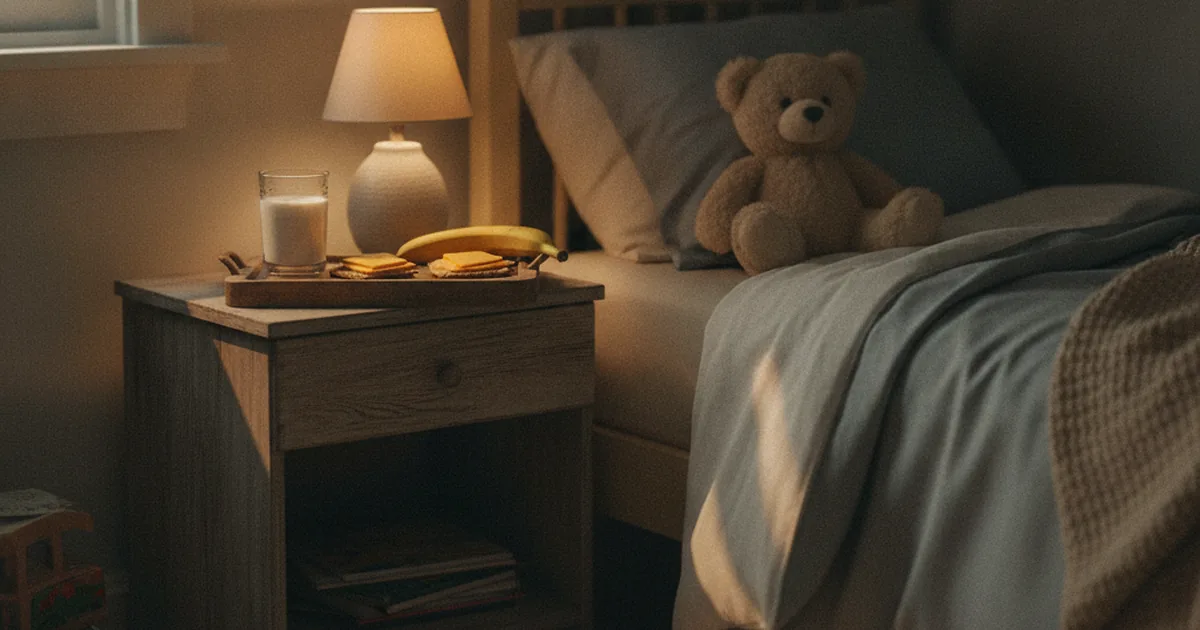
The pattern that shows up again and again in pediatric nutrition guidance is pairing a little protein or fat with a complex carbohydrate. That combination digests more slowly than sugar alone, which helps blood sugar stay steadier through the night instead of spiking and then dipping — a dip that can itself trigger a waking. Simple, low-effort options many parents rely on:
- A few whole-grain crackers with a slice of cheese
- A small bowl of plain (not sugary flavored) yogurt
- Half a banana or a few slices of apple with a spoon of nut butter (if age-appropriate and allergy-safe)
- A small glass of milk, warm or cold
- A few whole-grain crackers alone, if your child just needs something small
Portion size matters as much as the ingredients. This is a "take the edge off" snack, not a second dinner — a big meal close to bedtime can cause its own problems, covered next.
What should stay out of the bedtime snack rotation?
Three categories tend to backfire, and they're worth being deliberate about:
Sugar. Cookies, candy, sweetened cereal, or a sugary "treat" snack can cause a quick blood sugar spike followed by a dip a couple of hours later — right in the middle of the night for many kids — which can contribute to waking up. It's also simply activating in the short term, which works against the calm, winding-down mood you're trying to build.
Caffeine, including hidden sources. Chocolate is the one parents most often miss: even a modest amount contains caffeine, and kids are smaller and metabolize it more slowly than adults, so the effect is proportionally bigger. Chocolate milk, chocolate-flavored desserts, and dark chocolate in particular can carry more caffeine than parents expect. As a simple rule, keep chocolate, soda, and anything else caffeinated well away from the hours before bedtime.
A large or heavy meal. A full plate of food, or anything rich and greasy, close to lights-out can cause discomfort, bloating, or reflux that actively wakes a child once they lie flat. If dinner ran late or was unusually light, a proper light snack is still the better fix — just keep it genuinely light rather than a second full meal.
Does warm milk before bed really work?
It's one of the oldest bedtime traditions for a reason, but the mechanism is more about comfort and ritual than chemistry. Milk does contain a small amount of tryptophan, the amino acid the body uses as a building block for serotonin and, eventually, melatonin — but the amount in a single glass is unlikely to meaningfully shift sleep chemistry on its own (for more on how melatonin actually works in kids, and why timing and light matter more than any single food, see our post on the role of melatonin in children). What warm milk reliably does is signal, through repetition, that bedtime is here: a warm cup, a dim room, a familiar taste. If it's part of a routine that works for your family, there's no reason to drop it.
How does a bedtime snack fit into the rest of the wind-down?
A snack works best as one predictable step in a short, repeatable sequence rather than a stand-alone event. Something like: dinner earlier in the evening, a light snack about 30-60 minutes before lights-out if your child is hungry, then bath or wash-up, teeth, a calm story, and lights dimmed gradually. Keeping the snack itself boring and consistent — the same one or two options most nights — also avoids turning it into a negotiation ("but I want the cookie one") that undercuts the very calm you're building toward.
If hunger isn't the culprit and your child is still waking up multiple times a night regardless of what or when they eat, it's worth reading our guide on frequent night wakings in toddlers, since food is only one of several common causes. And if bedtime itself has become a drawn-out negotiation before you even get to the snack, bedtime stalling tactics covers how to hold a calm line without a nightly battle.
This post reflects general parenting guidance and isn't medical advice. If your child has a diagnosed feeding, allergy, reflux, or growth concern, please follow your pediatrician's or dietitian's specific recommendations, since they may differ from general guidance.
Your child's privacy: No child data is sent - just the story request. How we protect your child's privacy.
Frequently asked questions
Is it OK to give a toddler a snack right before bed?
Yes, a small snack 30-60 minutes before bed is fine, and for a genuinely hungry child it can prevent a hunger-driven wake-up overnight. The key is size and timing: keep it light, avoid anything sugary or caffeinated, and leave a little time between the last bite and lights-out so digestion isn't in full swing right as your child lies down.
Does warm milk actually help kids fall asleep?
The effect is more about ritual and comfort than biochemistry. Milk contains a small amount of tryptophan, an amino acid the body uses to make serotonin and melatonin, but the quantity in a single glass is unlikely to meaningfully change sleep on its own. Still, a warm, familiar drink as part of a consistent routine can genuinely help a child feel calmer, and that association is worth keeping if it works for your family.
Can a bedtime snack cause night wakings instead of preventing them?
It can, if the snack is the wrong kind. Sugary foods can cause a blood sugar spike and later dip that disrupts sleep, caffeine (including hidden sources like chocolate) is a stimulant that can delay or fragment sleep for hours, and a large or heavy meal close to bedtime can cause discomfort or reflux that wakes a child up. A small, plain, balanced snack is far less likely to backfire than dessert-style food.
How much caffeine from chocolate is too much before bed?
Even small amounts of caffeine can affect a child more than they would an adult, because kids are smaller and metabolize it more slowly. A few squares of milk chocolate contain a modest amount, but dark chocolate and chocolate-flavored desserts can carry meaningfully more. As a simple rule, avoid chocolate and other caffeinated foods or drinks within several hours of bedtime, especially for younger or more sleep-sensitive children.
What's a good bedtime snack for a child who wakes up hungry at night?
Look for something small that pairs a little protein or fat with a complex carbohydrate, since that combination digests slowly and helps blood sugar stay steadier overnight. Options many parents use include a few whole-grain crackers with cheese, a small bowl of plain yogurt, half a banana, or a small glass of milk. Keep portions modest — the goal is taking the edge off hunger, not a second dinner.
How long before bed should the last snack be?
Aiming for roughly 30-60 minutes between the last bite and lights-out works well for most families. That gives enough time for a small snack to settle without needing a full digestion window, while still fitting inside a normal wind-down routine of bath, pajamas, teeth, and a calm story.
Sources
American Academy of Pediatrics (HealthyChildren.org) — Nutrition.
Sleep Foundation — Food and Drink That Promote Good Sleep.
Sleep Foundation — Toddler Sleep.
ZERO TO THREE — Sleep: What Every Parent Needs to Know.