When to Stop Swaddling and Switch to a Sleep Sack: A Timing and Safety Guide
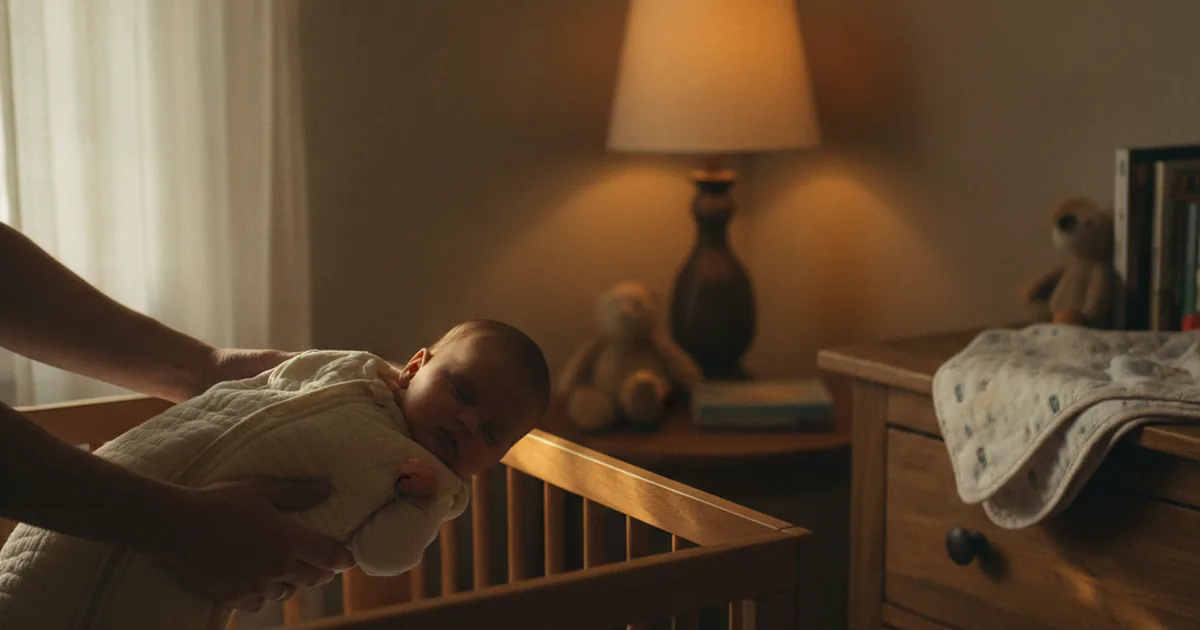
When should I stop swaddling my baby?
The honest answer is: as soon as there's any sign your baby can roll, whether that's from back to front, front to back, or even a single half-roll during tummy time. For most babies that lands somewhere between 2 and 4 months, though some roll earlier and some later — it's a developmental milestone, not a date on a calendar. Pediatric guidance is consistent and unambiguous on this point: the first sign of rolling means arms-in swaddling stops that same day, not "in a week or two once we're sure." A single roll is proof enough.
Some babies also start actively breaking out of a swaddle before they roll — wriggling an arm free repeatedly overnight, or seeming to fight the wrap where they used to settle into it. A swaddle that's coming loose on its own is unsafe for a different reason: loose fabric near the face is a suffocation risk regardless of rolling. That's also a signal to retire the swaddle, even if rolling hasn't started yet.
What are the signs my baby is ready for a sleep sack?
Look for these in combination, though any single one is enough to act on:
- Rolling, even once: back-to-front, front-to-back, or a half-roll during awake tummy time all count.
- Pushing up on forearms: during tummy time, a baby who can lift their chest and turn their head easily is building the strength that leads to rolling soon after.
- Rocking side to side: often the dress rehearsal for a full roll, sometimes appearing days or weeks before it.
- Escaping the swaddle: an arm free by morning, night after night, means the wrap isn't doing its job safely anymore.
- Increased overnight fussiness in the swaddle: some babies start resisting the wrap itself as they get more mobile and want to move.
If none of these have shown up yet and your baby is sleeping well swaddled, there's no need to rush the switch early just because a milestone chart says "by 3 months." Rolling is the trigger, not an estimated age.
Why is swaddling unsafe once a baby starts rolling?
A swaddle's whole job is to keep the arms snug against the body, which is exactly what makes it dangerous once rolling begins. A baby who rolls face-down with their arms pinned can't push up, turn their head to the side, or roll back over — all the reflexive moves a baby normally uses to keep their airway clear. That combination of restricted arms and a face-down position is the specific scenario safe-sleep guidance is built around avoiding. It isn't that rolling itself is dangerous; it's rolling while unable to reposition that raises real risk. That's why "wait until you're sure they're really rolling" isn't good advice — one confirmed roll is the entire threshold.
Should I switch cold turkey or transition gradually?
Both approaches work, and which one suits your baby is often something you only learn by trying. A gradual version looks like: one arm out of the swaddle for a few nights, then both arms out (essentially a loose wrap around the torso only), then a full switch into a sleep sack. The idea is to let your baby get used to having their limbs free in stages rather than all at once.
A faster switch — straight from full swaddle into a sleep sack — is simpler and works well for many babies too, especially ones who tend to wake up more, not less, when only partially unswaddled (an arm free can startle a baby via the Moro reflex just as easily as it can free them). If your baby has already started rolling, don't stretch the transition out for the sake of gentleness; the swaddle needs to stop being used arms-in right away, even if the sleep sack adjustment period that follows is a little bumpy.
What TOG rating sleep sack should I use?
TOG is a warmth rating printed on most sleep sacks, and matching it to your room temperature matters more than following an age chart. As a general guide: 0.2–0.5 TOG for a hot room or summer nights, 1.0 TOG for an average room around 20–24°C (68–75°F), and 2.5 TOG for a cold room, worn over light rather than heavy pajamas underneath. If you're navigating a particularly hot stretch, our guide on cooling a hot bedroom without AC has more on dressing for the heat safely.
Check for overheating by feeling your baby's chest or the back of their neck, not their hands and feet, which are normally cooler. Sweating, damp hair, or flushed skin are the real warning signs, not a slightly cool hand.
Can the switch cause a sleep regression?
For some babies, yes, at least for a few nights. The snugness of a swaddle is genuinely calming for many infants — it can dampen the startle reflex and mimic the security of the womb — so losing that all at once is a real change, not just a wardrobe swap. Expect possible rougher nights for anywhere from a couple of days to about a week and a half. Firm, hands-on patting or holding right after the switch, a consistent bedtime routine, and white noise can all help bridge the gap; our guide on what white noise is actually doing for baby sleep covers how to use it well. If sleep disruption from this switch overlaps with an actual developmental leap, it can look and feel like a bigger regression — our overview of sleep regressions by age can help you tell the two apart.
What if my baby fights the sleep sack itself?
A little resistance in the first few nights is common and not a sign you did something wrong. Sizing matters: a sleep sack that's too roomy can feel unfamiliar and untethered compared to a snug swaddle, while one that's too tight around the hips can be uncomfortable and even affect healthy hip positioning. Look for a sack sized to your baby's current weight and length with room for the legs to move freely at the hips, and give it several nights before concluding it isn't working — most babies adapt faster than parents expect once the novelty wears off.
Your child's privacy: No child data is sent - just the story request. How we protect your child's privacy.
Frequently asked questions
When should I stop swaddling my baby?
Stop swaddling with arms in the moment your baby shows any sign of rolling, which is typically between 2 and 4 months, even if it's only ever happened once. Rolling is the hard safety cutoff, not a suggested guideline — a swaddled baby who rolls onto their stomach may not be able to roll back or lift their head to clear their airway.
What are the signs my baby is ready for a sleep sack?
Watch for pushing up on their forearms during tummy time, rocking side to side, turning fully from back to belly or belly to back even once, and breaking out of the swaddle repeatedly overnight. Any one of these is a sign to retire the swaddle and move to a wearable blanket that leaves the arms and hips free.
Why is swaddling unsafe once a baby starts rolling?
A tight swaddle pins the arms down, so a baby who rolls onto their stomach loses the ability to push up, turn their head, or roll back over on their own. Combined with the rolling itself, that raises the risk of suffocation — which is why pediatric guidance treats the first roll as an immediate, non-negotiable stopping point for arms-in swaddling.
Should I switch cold turkey or transition gradually with one arm out first?
Either can work, and which one suits your baby better often only becomes clear by trying. A gradual approach — one arm out for a few nights, then both arms out, then straight into a sleep sack — gives a baby time to adjust to having their limbs free. A faster switch, straight into a sleep sack, tends to work well for babies who wake more, not less, once one arm is free. Once rolling has started, don't delay the full switch for the sake of a slower transition.
What TOG rating sleep sack should I use?
TOG measures a sleep sack's warmth: roughly 0.2–0.5 TOG for hot weather or a warm room, 1.0 TOG for an average room around 20–24°C (68–75°F), and 2.5 TOG for a cold room, layered over light pajamas rather than heavy ones. Check for sweating, damp hair, or a hot chest or back — not just cold hands — to judge whether your baby is overheating.
Can the swaddle-to-sleep-sack switch cause a sleep regression?
Some babies do have a rough few nights, since the swaddle's snugness was part of what helped them feel calm and stay asleep. Most adjust within a week to ten days, especially with a consistent routine and, if needed, other calming inputs like white noise or firm swaddle-style hands-on soothing in the moment right after the switch.
Sources
American Academy of Pediatrics (HealthyChildren.org) — Swaddling: Is it Safe?.
NICHD Safe to Sleep® — Reducing the Risk of SIDS and Suffocation.
Sleep Foundation — Swaddling a Baby: Safety Tips and How-To Guide.
CDC — Infant Motor Development Milestones.